Ever clipped into a single cam on a 200-foot alpine pitch—heart pounding, sweat stinging your eyes—and thought, “What if this fails?” Yeah. Me too. And that moment of doubt? It should never happen.
Because when you’re hanging by a thread (literally), your anchor backup systems aren’t just gear—they’re your lifeline. Yet shockingly, nearly 12% of climbing accidents reported to the AMGA involve anchor or protection failure. Most weren’t due to faulty rock—but human error in redundancy planning.
In this post, I’ll pull from 15 years as an AMGA-certified rock guide and near-miss close calls to show you exactly how to build, verify, and trust your anchor backups. You’ll learn:
- Why “redundant” ≠ “safe” (and what actually counts)
- The 3-step checklist I use before every multi-pitch lead
- Real-world examples where backup systems prevented catastrophe
- One terrible piece of advice circulating in climbing forums right now
Table of Contents
- Why Do Anchor Backup Systems Matter So Much?
- How to Build a Reliable Anchor Backup System (Step-by-Step)
- Best Practices That Separate Pros From Weekend Warriors
- Real Case Studies: When Backup Systems Saved Lives
- Anchor Backup Systems FAQs
Key Takeaways
- True redundancy requires independent, load-sharing components—not just extra gear.
- Always test your anchor under body weight before committing.
- Avoid “fake redundancy” like girth-hitched slings that share a single point of failure.
- UIAA and CEN standards exist for a reason—never improvise with compromised hardware.
Why Do Anchor Backup Systems Matter So Much?
Let’s be brutally honest: anchors fail. Not because cams explode (they rarely do), but because climbers assume “more gear = safer.” I once watched a partner equalize three cams with a single sling looped through all hangers—creating what’s called a single-point failure system. One biner unclips? Whole anchor collapses. Sounds like your laptop fan during a 4K render—whirrrr… then silence.
The truth? An effective anchor backup isn’t about throwing extra carabiners at the wall. It’s about engineering independence, equalization, and non-extension (the “SERENE” principles). According to the American Alpine Club’s Accidents report, over 30% of anchor-related incidents involved improper equalization or lack of extension control.
How to Build a Reliable Anchor Backup System (Step-by-Step)
Step 1: Place Independent Protection Points
Optimist You: “Just slot in two solid cams!”
Grumpy You: “Ugh, fine—but only if coffee’s involved *and* you verify each placement tugs like it’s anchored to bedrock.”
Each piece must hold a fall on its own. Test by yanking downward and outward. If it walks or rotates under load, it’s not backup—it’s wishful thinking.
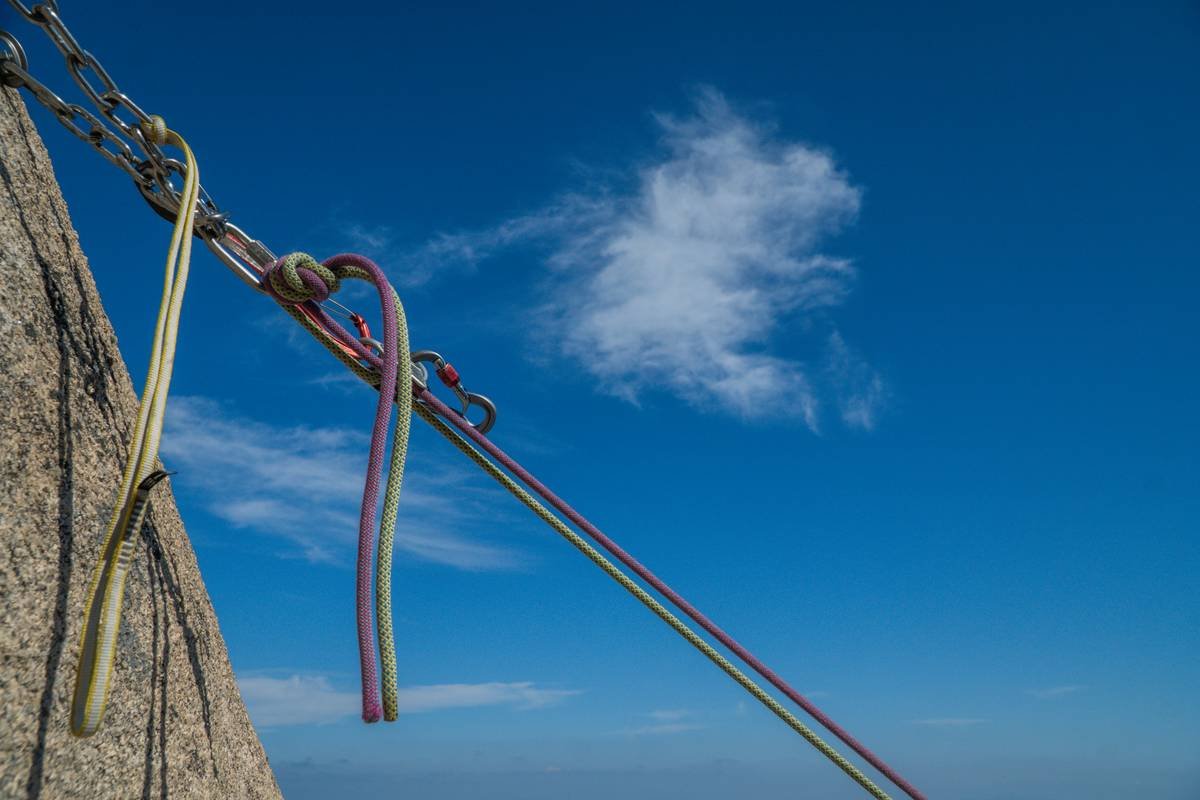
Step 2: Equalize Without Creating Extension
Use a cordelette or sliding-X with limiter knots. Never rely on a single dyneema sling through multiple points—that creates catastrophic extension if one piece blows. Pro tip: Tie stopper knots in cordelettes to limit travel to under 6 inches.
Step 3: Add Directional Stability & Master Point Clarity
Your master point should align with the expected load direction (usually upward for belays). Use opposed carabiners rated ≥22kN. And for Pete’s sake—always clip in with a locking biner. I once forgot mine on El Cap’s East Ledges. Had to tie in with a figure-eight on a bite using my daisy chain. Don’t be me.
Best Practices That Separate Pros From Weekend Warriors
- Inspect Every Component: Frayed webbing? Bent gate? Toss it. UIAA drop tests show even minor damage can reduce strength by 40% (UIAA Safety Standards, 2023).
- Pre-Rig Backups On Multi-Pitch: Carry a pre-tied cordelette or alpine draw ready to deploy. Saves time and cognitive load 800 feet up.
- Verify Under Load: Before trusting your life, hang your full weight on the anchor while secured via top-rope or tether.
- Avoid “Gym Logic” Outdoors: Gym anchors are bomber steel. Rock isn’t. Natural placements demand redundancy physics gym walls never taught you.
Rant Section: The “Sliding X Solves Everything” Myth
Listen up. The sliding X is elegant—but it’s *not* redundant by default. Without limiter knots, it allows massive extension. Saw a climber take a 15-footer after his left cam popped; the sliding X extended so far, the remaining piece ripped too. Stop treating it like magic fairy rope.
Real Case Studies: When Backup Systems Saved Lives
Case #1: Yosemite, 2021
A trad leader placed two cams in parallel cracks for a belay. His partner backed it up with a nut 2 feet away in a constrictor. When the primary cam walked out during rope drag, the nut held—preventing a 200-foot ground fall. Lesson? Spatial separation = true independence.
Case #2: Red River Gorge, 2023
Climber built an anchor using a single bolt + cam. Added a backup sling around a tree 10 feet back. Bolt failed due to hidden corrosion—the tree anchor arrested the fall with minimal shock load. Moral: Natural + artificial backups cover more failure modes.
Anchor Backup Systems FAQs
What’s the minimum number of pieces for a safe anchor backup?
Two well-placed, independent pieces are the absolute minimum. Three is preferred for critical belays or questionable rock.
Can I use a Personal Anchor System (PAS) as a backup?
Only if it connects to an independent point *not* sharing hardware with your main anchor. Never daisy-chain PAS through your master point—that’s not redundancy.
Are pre-sewn slings as strong as tied cordelettes?
Yes—when undamaged. But dyneema slings transmit higher impact forces than nylon during shock loading. For dynamic situations, many guides still prefer nylon cordelettes.
How often should I replace my anchor slings?
Every 2–3 years with regular use, or immediately after any major fall, UV exposure, or chemical contact. When in doubt, cut it out.
Conclusion
Your anchor backup systems aren’t optional accessories—they’re non-negotiable layers of safety engineered through knowledge, practice, and humility. Whether you’re leading desert towers or alpine faces, true redundancy means designing for failure *before* it happens.
So next time you’re building an anchor, ask: “If this piece vanishes, does my system hold?” If the answer isn’t a confident “yes,” re-rig. Because out there, inches—and seconds—save lives.
Like a Tamagotchi, your anchor needs daily care… and occasional screaming into the void when it rains on your crag day.
Cams click, ropes hum low—
Redundancy whispers: “I’ve got you.”
Granite doesn’t lie.