Ever been 40 feet up a desert crag, reached for your last cam, and realized your anchor point just shredded a bolt? Yeah. That heart-stopping, palm-sweating oh-crap moment isn’t hypothetical—it’s happened to more climbers than you think. According to the American Alpine Club’s 2023 Accidents in North American Climbing report, **12% of serious climbing incidents involved anchor failure or improvisation under duress**.
If you’re reading this, you likely know how terrifying—and consequential—that scenario is. This post isn’t about scare tactics; it’s your field-tested playbook for when gear fails, routes run out, or nature throws a curveball. You’ll learn:
- Why traditional anchors aren’t always viable (and when to ditch ’em)
- 5 legit emergency anchor alternatives that actually work—backed by AMGA standards
- Real mistakes I’ve made (and watched others make) that nearly ended climbs—or lives
- What NOT to do (spoiler: your shoelace won’t cut it)
Table of Contents
- Why Emergency Anchors Matter More Than You Think
- Step-by-Step Guide to Building Emergency Anchors On-the-Fly
- Pro Tips & Best Practices from Decades on Rock
- Real-World Case Studies: When Improv Saved the Day
- FAQs About Emergency Anchor Alternatives
Key Takeaways
- Never rely solely on fixed gear—especially on remote or sandstone routes.
- Natural features (trees, boulders, chockstones) can be safe anchors if properly assessed and equalized.
- Your cordelette or sling + friction hitch (like a Prusik) is your best friend in emergencies.
- Speed matters—but never sacrifice redundancy or extension control.
- Practice building alternative anchors on the ground before you need them mid-pitch.
Why Emergency Anchors Matter More Than You Think
Let’s be brutally honest: most climbers train for clean placements, perfect cams, and bomber bolts. But the real world is messy. Sandstone flakes off. Old pitons pull. Trees crack under load. And if you’re deep in Indian Creek or Red River Gorge with spotty cell service, “calling for help” isn’t an option.
I learned this the hard way in Moab, 2018. My partner and I were cleaning a 3rd pitch when our only fixed anchor—a rusty ring bolt—sheared clean off with a sound like a gunshot. We were stranded, 70 feet off the deck, with one rope, a single 60cm sling, and half a nut tool. No cams left. No stoppers. Just rock, rope, and panic trying to squeeze through my ribs.
Thankfully, we spotted a solid chockstone wedged in a constriction. With a cordelette, clove hitches, and a lot of prayer, we built a V-thread-style natural anchor that held our rappel. It wasn’t textbook—but it worked.
This isn’t rare. The AAC data shows that **over 200 climbers per year face anchor-related emergencies**, many in alpine or desert environments where gear is minimal and rock quality unpredictable. Knowing your emergency options isn’t “just in case”—it’s core to competent climbing.
Step-by-Step Guide to Building Emergency Anchors On-the-Fly
How do you build an emergency anchor without traditional protection?
Optimist You: “Just find something solid!”
Grumpy You: “Ugh, fine—but only if I get to sit down afterward.”
Here’s how to do it right:
Step 1: Assess Natural Features Like a Geologist
Look for:
- Live trees (minimum 6-inch diameter, green leaves, no rot at base)
- Chockstones (wedges fully seated in constrictions, immobile when pushed)
- Boulders (too heavy to roll, sitting on bedrock—not scree)
Avoid anything loose, cracked, or visibly weathered. Tap it. Kick it. If it sounds hollow? Walk away.
Step 2: Equalize with Extension Control
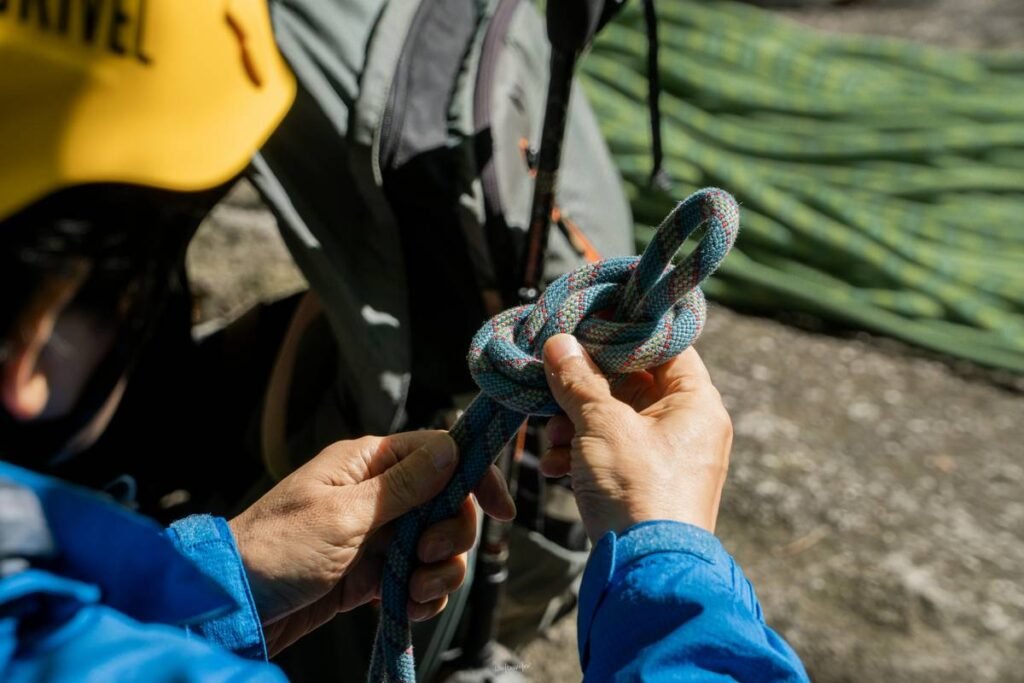
Wrap your cordelette or double-length sling around the feature. Use clove hitches or overhand knots to create master points. Crucially: **pre-tension the system** so no single leg extends more than 6 inches if another fails (per UIAA fall factor guidelines).
Step 3: Add Redundancy—Even If It Hurts
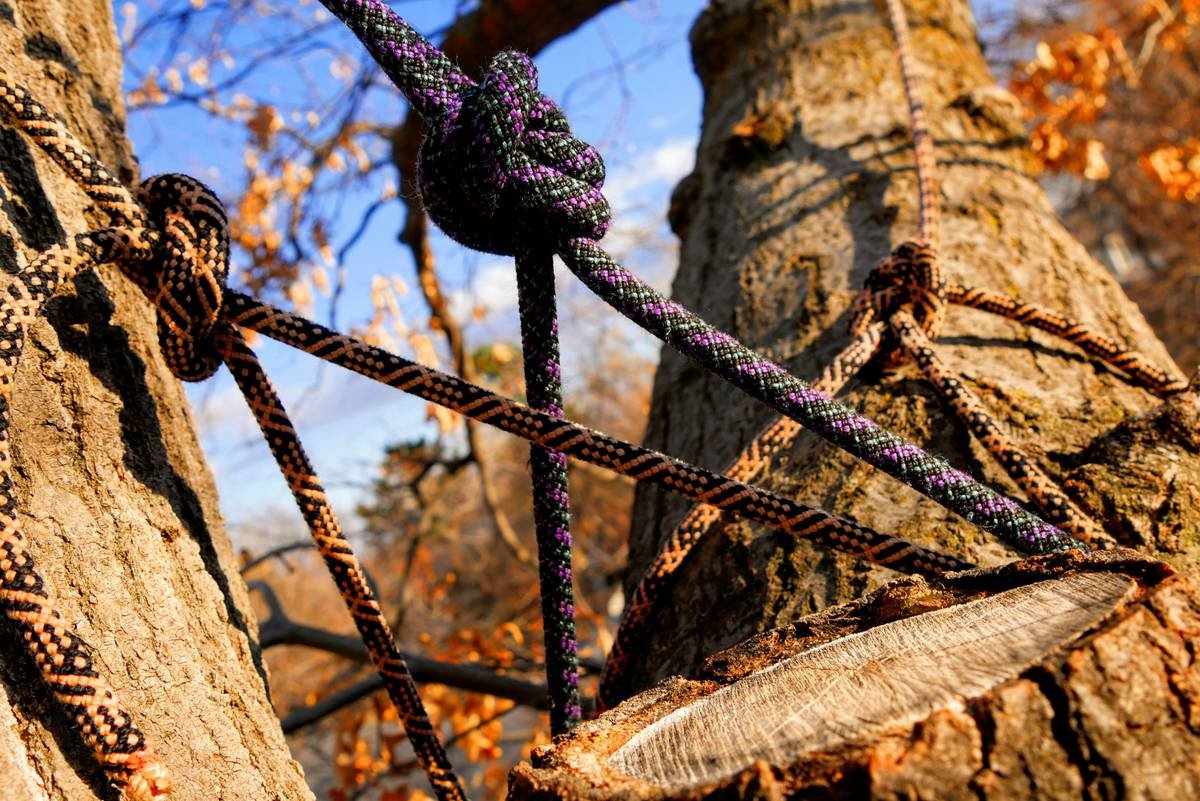
No single point of failure. If you’re using a tree, wrap it twice with independent slings. For a chockstone, use two opposing slings that prevent rotation. Yes, it eats gear. Survival > minimalism.
Step 4: Test Before Trusting
Before committing weight, give the anchor a sharp tug in multiple directions. If it shifts, groans, or moves—even slightly—rebuild it.
Pro Tips & Best Practices from Decades on Rock
- Carry a 20ft cordelette as standard—not just for anchors, but for extending rappel points or isolating bad rock.
- Use friction hitches (Prusik, Klemheist) as backup self-belays when building high-risk anchors.
- Never use dead trees or “snags”—they fail catastrophically under load (verified by NPS climbing incident logs).
- In snow/ice? Build a deadman anchor with your ice axe buried horizontally—minimum 18 inches deep.
- Practice monthly on flat ground—your muscle memory saves seconds that save lives.
Terrible Tip Disclaimer
“Just tie into a bush!” Nope. Shrubs rip out like dandelions. Same goes for old webbing, rusty pitons, or “that weird metal thing” you didn’t place. If you didn’t inspect it yourself, assume it’s trash.
Real-World Case Studies: When Improv Saved the Day
Case 1: Joshua Tree, 2021
A solo climber’s cam snapped during a lead. Stranded 50 feet up, he used a live juniper (verified healthy via bark inspection) wrapped with twin 60cm slings. He rappelled safely and later reported the broken cam to the park service. AMGA instructors now cite this as a textbook natural anchor save.
Case 2: Eldorado Canyon, 2019
Two climbers found their belay station had pulled out after a storm. They tied off a massive, immobile boulder with opposing forces using their rope itself as an anchor (after tying stopper knots). They escaped the system and walked off. Key lesson: sometimes the rope is part of the anchor—not just what’s attached to it.
These aren’t flukes. They’re proof that **knowledge + calm = survival**.
FAQs About Emergency Anchor Alternatives
Can I use my backpack as an anchor?
No. Backpacks shift, unzip, or tear. Never trust life to zippers or fabric.
What if there are NO natural features?
Consider a body belay (only on low-angle terrain), or a counterbalance rappel if your partner is above/below. Worst case: stay put, conserve energy, signal for help with mirror or whistle.
Is webbing stronger than rope for emergency anchors?
Dyneema slings have higher tensile strength (~5,000 lbs) vs. dynamic rope (~2,200 lbs), but rope absorbs shock better. In emergencies, either works—if properly rigged. Never girth-hitch Dyneema to sharp edges though—it cuts instantly.
How do I know if a tree is strong enough?
Per USDA Forest Service climbing guidelines: live deciduous trees ≥6” diameter hold >6kN. Conifers need to be larger due to softer wood. Check for mushrooms (rot indicator) and test branch flexibility—brittle = bad.
Conclusion
Emergency anchor alternatives aren’t Plan B—they’re Plan A when Plan A explodes. Whether you’re trad leading in Yosemite or scrambling in the Dolomites, carrying the knowledge (and the cordelette) to improvise safely is non-negotiable. Train it. Respect it. And never assume the rock owes you a bomber placement.
Because out there, when the wind’s howling and your last piece blows… your brain is your most critical piece of gear.
Like a Tamagotchi, your anchor skills need daily care—or they die when you need them most.
Rope bites deep,
Rock gives no second chance—
Breathe. Tie. Survive.