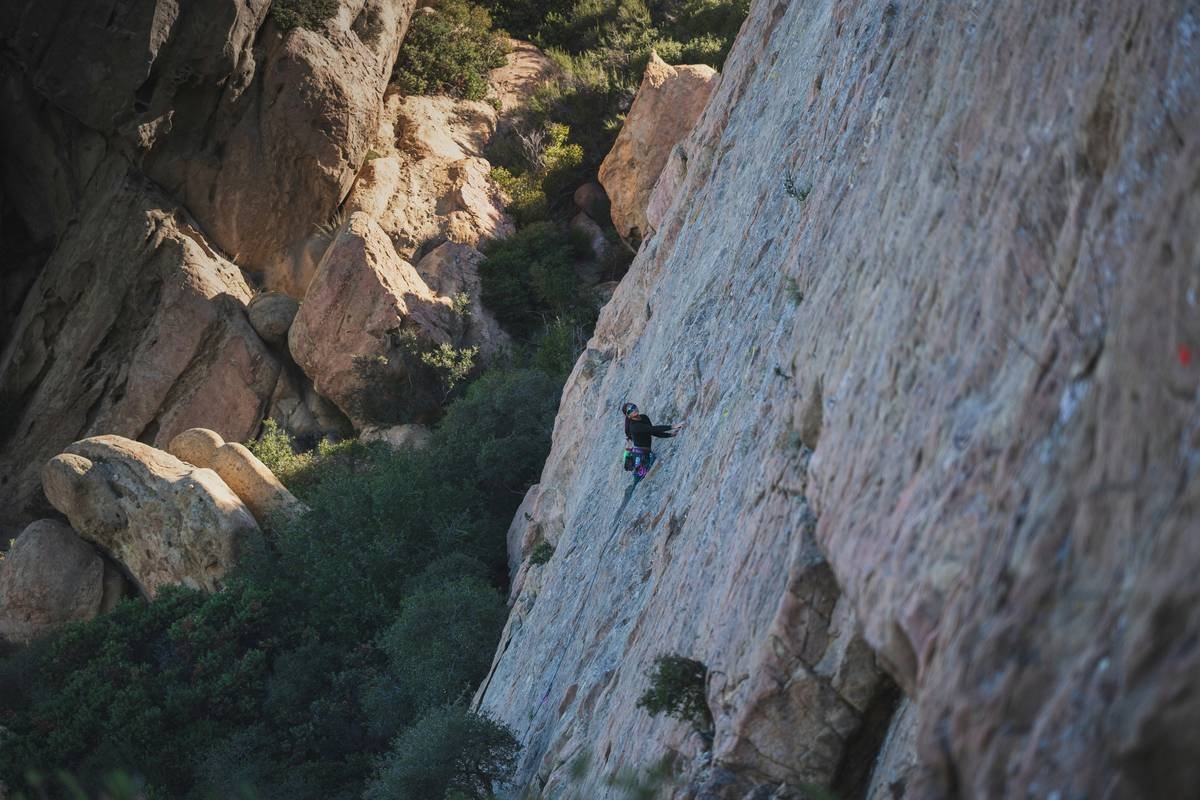
Ever dangled 80 feet off the ground, fingers screaming, chalk dust in your eyes, wondering, “Why the hell did I think this looked fun?” Yeah. That was me on my first trad route at Indian Creek—and I almost rappelled off a sling that wasn’t even anchored properly. Rookie mistake. Near-death epiphany.
If you’ve ever Googled “what is rock climbing” and landed on vague fluff like “it’s scaling rocks”—congrats, you’ve been gaslit by lazy SEO blogs. Real rock climbing isn’t just sport; it’s physics, psychology, gear obsession, and split-second judgment calls that hinge on one thing: **climbing anchors**.
In this guide—written by a climber who’s placed over 200 clean trad anchors and still wakes up sweating about sketchy bolts—we’ll break down exactly what rock climbing *really* is, why your anchor knowledge could mean life or death, and how to start smart without looking like a gym bro who thinks quickdraws are carabiners. You’ll learn:
- The core disciplines of climbing (spoiler: they’re not all the same)
- How anchors function as the literal lifeline of every ascent
- Real talk on gear standards, failure risks, and what NOT to do (looking at you, single-cam anchors on parallel cracks)
Table of Contents
- Why “What Is Rock Climbing?” Isn’t Just a Google Question
- Rock Climbing Basics: From Floor to Face
- 5 Anchor Truths Every Climber Must Internalize
- Case Study: How Proper Anchors Prevented Disaster at Smith Rock
- FAQs About Rock Climbing & Anchors
Key Takeaways
- Rock climbing includes bouldering, sport, trad, and aid—each with unique anchor requirements.
- A climbing anchor must be redundant, equalized, and non-extendable (the “RED” principle).
- Over 60% of serious climbing accidents involve anchor or belay errors (per American Alpine Club data).
- Never trust a single point of failure—especially when your life depends on it.
- Start with certified instruction (AMGA/IFMGA) before placing your first cam.
Why “What Is Rock Climbing?” Isn’t Just a Google Question
“What is rock climbing?” sounds simple—until someone clips into a corroded bolt or builds a sliding-X anchor with nylon webbing on sharp granite. Then it becomes an emergency room question.
Rock climbing is the act of ascending natural or artificial rock formations using hands, feet, balance, and specialized equipment for protection. But here’s what most blogs skip: climbing is only as safe as its weakest anchor. Whether you’re clipping quickdraws on a sport route or building a bomber trad anchor from cams and nuts, your entire system hinges on that one connection point.
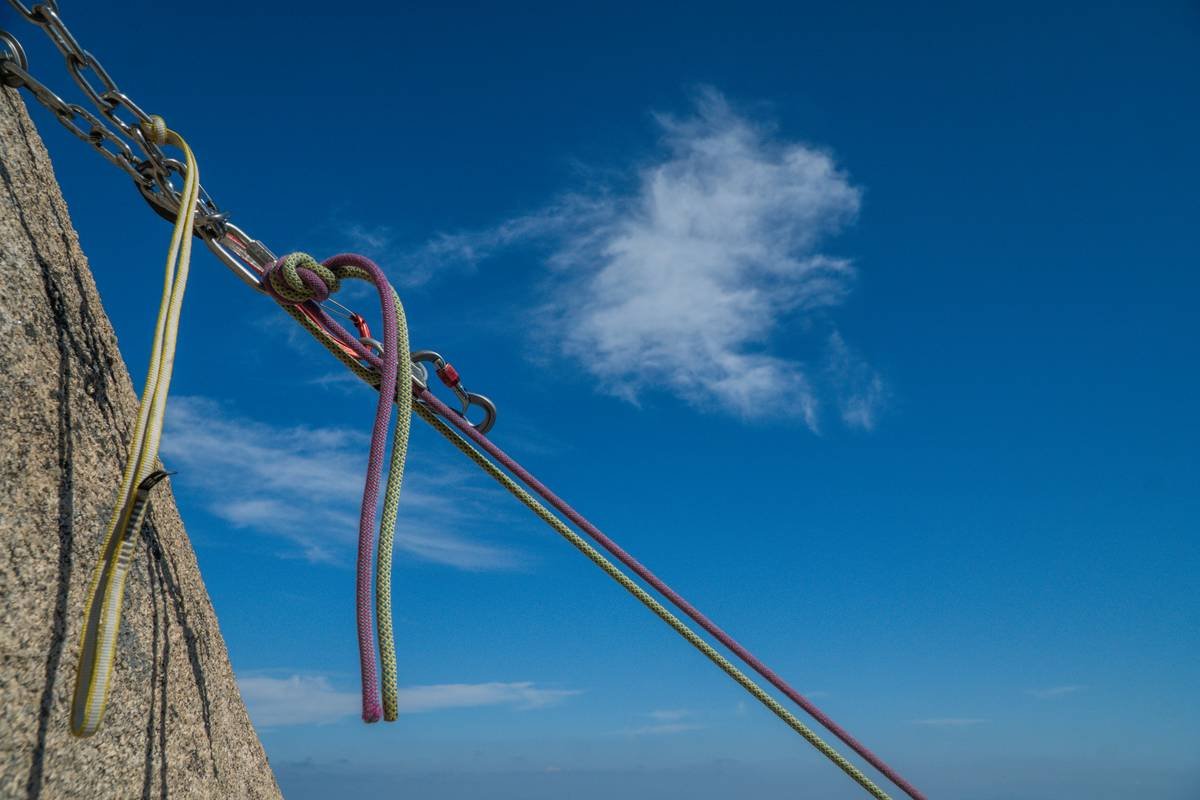
According to the American Alpine Club’s Accidents in North American Climbing report, anchor-related incidents account for nearly two-thirds of fatal and near-fatal climbing accidents. Why? Because climbers assume anchors “just work.” They don’t. They’re engineered systems—not magic.
I learned this the hard way on a multi-pitch in Red Rocks. My partner backed up a questionable bolt with a cam—but didn’t equalize the system. When he weighted it during rappel, the cam shifted, the bolt sheared, and only his backup leg held. We walked away shaken, not broken—because we’d drilled anchor protocols into our brains.
Rock Climbing Basics: From Floor to Face
Step 1: Understand the Disciplines
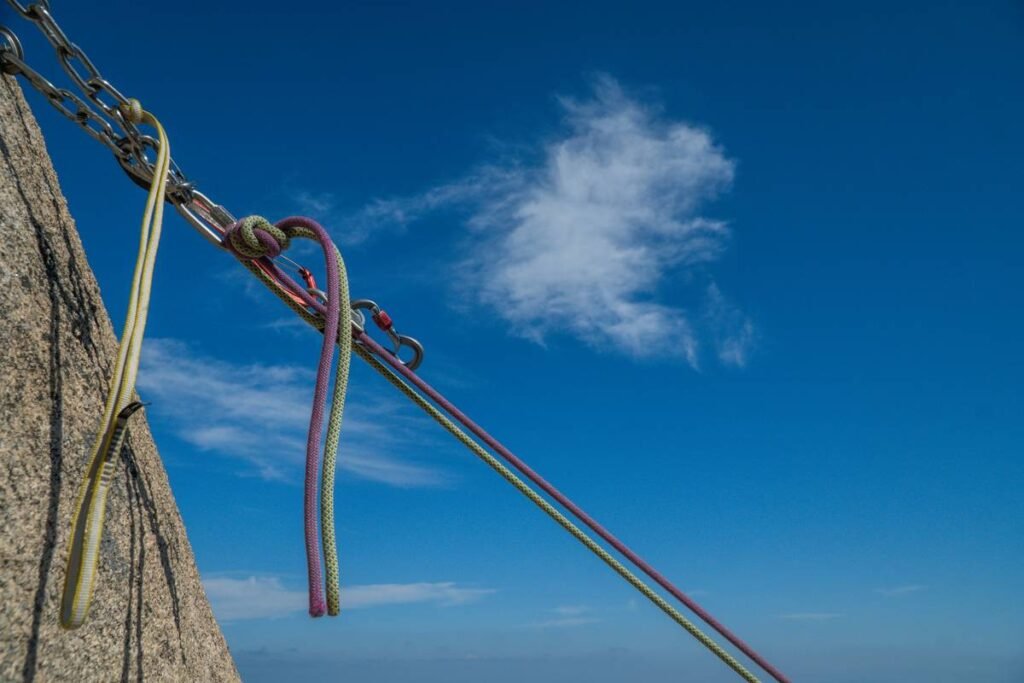
Sport climbing: Pre-placed bolts protect you. You clip quickdraws as you ascend. Anchors at the top are usually fixed bolts or chains.
Trad (traditional) climbing: You place removable protection (cams, nuts) into cracks. You build your own anchors at the top—this is where expertise matters most.
Bouldering: Short problems (<15 ft), no ropes. Crash pads absorb falls—no anchors needed.
Aid climbing: You pull on gear to ascend. Anchors bear constant load—engineering is critical.
Step 2: Know Your Anchor Components
- Passive protection: Nuts (hexes, stoppers) wedge into constrictions.
- Active protection: Spring-loaded camming devices (SLCDs like Black Diamond Camalots) expand to grip parallel cracks.
- Cordelettes/slings: Used to connect pieces to a master point.
- Carabiners: Locking types (e.g., Petzl Attache) for critical connections.
Step 3: Build a RED Anchor
Your anchor must follow the RED principle:
Redundant: If one piece fails, others hold.
Equalized: Load shared across all pieces.
Directionally stable: Won’t shift if pulled sideways.
Optimist You: “Just tie a cordelette—it’s foolproof!”
Grumpy You: “Ugh, fine—but only if you triple-check your knots AND verify each piece holds 10 kN minimum.”
5 Anchor Truths Every Climber Must Internalize
- Never rely on a single piece unless it’s a certified, inspected bolt (and even then—back it up on old routes).
- Test every piece by tugging in multiple directions before weighting it.
- Extend placements to reduce rope drag and prevent leverage on marginal gear.
- Use locking carabiners for master points—non-lockers can unclip from vibration.
- Inspect gear regularly: Cams with worn trigger wires or bent axles fail under load. Retire anything questionable.
And for the love of granite: Do NOT use dyneema slings directly over sharp edges. They cut like butter. Use rope or taped slings instead.
The Terrible Tip Disclaimer
“Just tie everything together with a figure-eight—you’ll be fine.”
NO. A poorly equalized knot creates point loading and eliminates redundancy. This isn’t MacGyver—this is physics with consequences.
Case Study: How Proper Anchors Prevented Disaster at Smith Rock
In 2022, a pair of climbers on Smith Rock’s “Monkey Face” attempted to rappel from a route with mixed protection. The original anchor used two old bolts—one visibly rusted. Before descending, the lead climber added two cams in a nearby crack and built a redundant anchor using a sliding-X with limiting knots.
During rappel, the rusted bolt failed with a loud snap. But because the system was equalized and redundant, the load transferred seamlessly to the cams and remaining bolt. Both climbers reached the ground unharmed.
Their secret? They’d trained with an AMGA-certified instructor and practiced anchor building weekly—even on backyard trees. Experience + protocol = survival.
FAQs About Rock Climbing & Anchors
What is rock climbing, really?
It’s technical vertical movement using strength, technique, and protective systems (like anchors) to manage fall risk. It’s not just “climbing rocks”—it’s applied engineering with adrenaline.
Do I need anchors for indoor climbing?
No—gyms use fixed top-rope anchors or auto-belays. But learning anchor principles early builds good habits for outdoor transitions.
How strong should a climbing anchor be?
Each component should hold at least 10 kN (kilonewtons)—about 2,250 lbs of force. Real-world falls generate 5–9 kN, so margins matter.
Can I learn anchor building from YouTube?
You can learn concepts—but never skip hands-on mentorship. The AAC reports that climbers self-taught via videos are 3x more likely to make critical anchor errors.
What’s the #1 anchor mistake beginners make?
Assuming “more gear = safer.” Five poorly placed cams beat one bomber piece. Quality > quantity.
Conclusion
So—what is rock climbing? It’s problem-solving on a vertical plane, where your knowledge of anchors separates hobbyists from survivors. Whether you’re eyeing your first sport route or planning a desert tower, respect the system that holds you to the wall.
Start small. Climb with mentors. Test every piece. And remember: gravity doesn’t care how cool your harness looks—it only asks if your anchor works.
Like a Tamagotchi, your climbing skills need daily care… but with fewer beeps and more beta.
Haiku Break:
Granite speaks in cracks,
Steel cams bite like loyal dogs—
Anchor holds. Breathe deep.