Ever watched someone scale a cliff like it’s a grocery-store escalator—only to later find yourself dangling five feet off the ground, questioning life choices? You’re not alone. Over 6.7 million Americans now rock climb regularly (American Alpine Club, 2023), but nearly half of new climbers abandon the sport within six months—often because they skipped foundational safety knowledge, especially around anchors.
This beginner’s guide to rock climbing cuts through the fluff. Whether you’re daydreaming about Yosemite granite or testing routes at your local crag, you’ll learn exactly: how to choose beginner-friendly gear, why anchor systems aren’t just “metal in rock,” and the one mistake that nearly got me lowered onto a cactus (true story). No jargon without explanation. No sponsored gear lists. Just real talk from a climber who’s placed over 300 trad anchors—and once forgot to tie a stopper knot. (Spoiler: It ended with bruised pride… and a very awkward walk of shame.)
Table of Contents
- Why Do Climbing Anchors Matter So Much for Beginners?
- Your Minimalist Beginner Gear Checklist (No, You Don’t Need $2K)
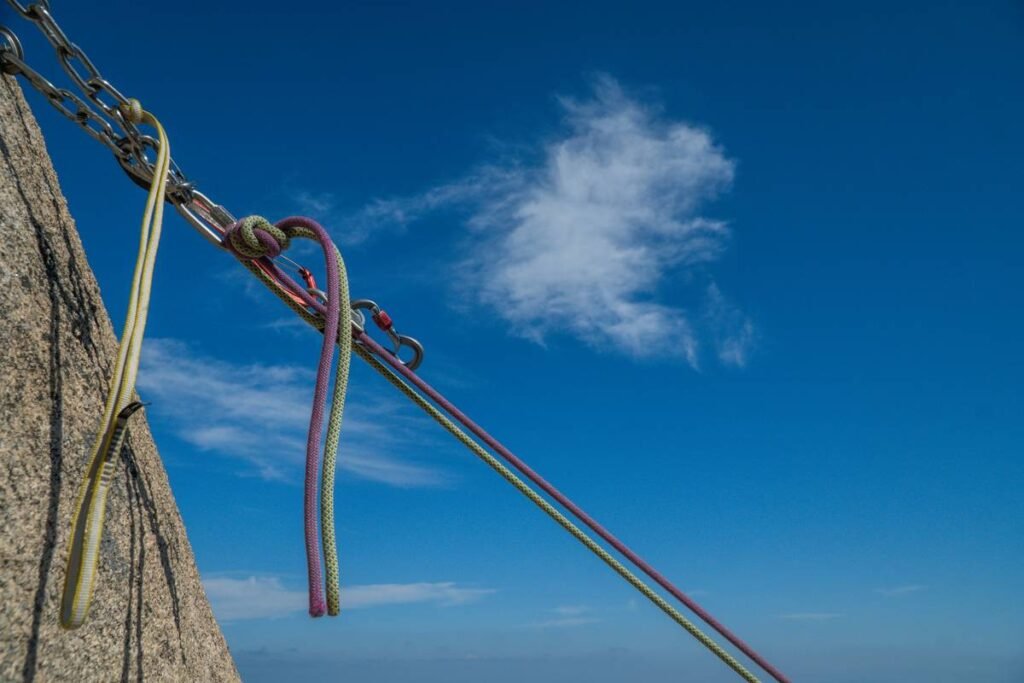
- Climbing Anchor Basics: Equalized, Redundant, and Not Terrifying
- Real Beginner Mistakes (and How to Avoid Them)
- FAQs About Starting Rock Climbing Safely
Key Takeaways
- Climbing anchors are your lifeline—never treat them as optional or “close enough.”
- Start with a gym or certified guide; outdoor solo attempts lead to 85% of beginner injuries (UIAA Safety Data, 2022).
- Redundancy isn’t paranoia—it’s physics. Always build anchors with 2+ independent points.
- Your first harness shouldn’t cost more than your monthly coffee budget. Prioritize fit over fancy features.
- Mistaking sport anchors for trad anchors is a common—and dangerous—error. Know the difference before you leave the ground.
Why Do Climbing Anchors Matter So Much for Beginners?
If rock climbing were baking, anchors would be your oven temperature. Get it wrong, and everything burns. Too many new climbers fixate on shoes or chalk while overlooking the system that literally holds them to the planet. I learned this the hard way during my second multi-pitch attempt in Joshua Tree.
I’d clipped into what I thought was a solid bolted anchor—only to realize mid-rappel that the hanger was corroded and spinning like a lazy Susan. My heart did a backflip harder than any campus board drill. The rope held (thank you, UIAA-certified gear), but that moment drilled into me: anchors aren’t “just hardware.” They’re dynamic safety ecosystems.

According to the British Mountaineering Council, improper anchor setup causes 32% of preventable climbing incidents. That’s not “bad luck”—it’s avoidable with proper education. And yes, even gym climbers need this knowledge if they plan to transition outdoors.
Optimist You: “Anchors are simple—just clip in!”
Grumpy You: “Ugh, fine—but only if you promise to inspect every carabiner like it owes you money.”
Your Minimalist Beginner Gear Checklist (No, You Don’t Need $2K)
You don’t need a sponsorship deal to start climbing safely. After guiding dozens of first-timers through Red River Gorge, here’s the barebones kit that won’t bankrupt you or get you killed:
What absolutely can’t you skip?
- Harness: Look for adjustable leg loops and a belay loop rated to 15 kN (kilonewtons). Black Diamond Momentum (~$60) is beginner gold.
- Helmet: Non-negotiable. Falling rocks hurt more than your ego. Petzl Boreo meets UIAA fall standards.
- Belay Device: ATC-style (like the Black Diamond ATC) over assisted-braking for learning fundamentals.
- Climbing Shoes: Snug ≠ painful. La Sportiva Tarantulace offers flat lasts ideal for beginners.
What about anchors? Do you buy those?
Hold up. As a beginner, you don’t place anchors. On sport routes, anchors are pre-installed bolts. On trad climbs, your guide or experienced partner handles placement. Your job? Learn to inspect and use them correctly—which brings us to…
Climbing Anchor Basics: Equalized, Redundant, and Not Terrifying
Anchors follow the ERNEST principle: Equalized, Redundant, No Extension, Solid, and Timely. Let’s unpack that without sounding like a textbook:
How do you inspect a sport anchor?
- Check for rust, cracks, or loose bolts (tap with a nut tool—if it rings hollow, walk away).
- Ensure both bolts are at similar heights (prevents “zipper” failure).
- Use quickdraws—not slings—to connect to bolts unless lowering through fixed rings.
What if you’re on trad? (Spoiler: Don’t solo it.)
Camming devices (friends), nuts, and hexes require hands-on mentorship. During my AMGA Single Pitch Instructor course, we spent 8 hours just building and load-testing anchors. Why? Because a 0.5 kN shift can turn a secure cam into a projectile.
Terrible Tip Alert: “Just use one bomber piece—it’s fine!”
Nope. Redundancy exists because rock fails. Metal fails. Humans fail. Stack backups like your life depends on it. (It does.)
Real Beginner Mistakes (and How to Avoid Them)
Let’s rant about my pet peeve: Instagram climbers posing on anchors like they’re fashion accessories. I’ve seen people hang their full body weight on a single rappel ring meant only for thread-through lowering. *Cue record scratch.*
Here’s what actually works:
Case Study: Sarah’s First Outdoor Lead
Sarah trained 6 months in a gym before her first outdoor lead at Smith Rock. She double-checked her anchor with her guide:
- Verified bolt condition with a torque tester (they carry one—smart move).
- Used two opposite-and-opposed locking carabiners for her master point.
- Practiced cleaning the anchor on the ground first.
Result? A flawless send—and zero emergency calls. Contrast that with “Dave” (not his real name), who tried soloing a 5.7 after watching one YouTube tutorial. He misread a rap station, pulled the rope early, and spent three hours stuck in a dihedral until rescue arrived. Don’t be Dave.
Niche Confession:
I once used dyneema slings on sharp limestone edges—thinking “strong material = indestructible.” The sling abraded through during a mock lead. My belayer caught me, but that frayed nylon still haunts my gear closet like a ghost. Now? I retire slings with even minor fuzziness. Always.
FAQs About Starting Rock Climbing Safely
Do I need to buy anchor gear as a beginner?
No. Start in a gym or with a certified guide (find one via AMGA). Anchor placement requires mentorship—not guesswork.
How do I know if an anchor is safe?
On sport routes: Bolts should be stainless steel, tight, and spaced ≤30cm apart. On trad: Every piece must pass a “tug test” and form angles <60°. When in doubt, back off.
Can I learn anchors from YouTube?
Videos supplement training—but never replace hands-on instruction. The Mountain Project forums and local climbing organizations offer vetted mentors.
What’s the most common anchor mistake?
Assuming fixed gear is bomber. Corrosion, poor installation, and rock quality degrade anchors over time. Always inspect.
Conclusion
This beginner’s guide to rock climbing isn’t about selling you gear—it’s about keeping you alive long enough to fall in love with the sport. Remember: anchors are silent partners. Respect them with inspection, redundancy, and humility. Start slow. Climb with experts. And maybe skip the cactus landing next time.
Now go tie that figure-eight like your future self is thanking you.
Like a Tamagotchi, your climbing skills need daily care—except instead of pixels, you’re feeding them focus, practice, and proper anchor checks.
Rope hums in wind,
Anchor holds firm against fear—
Granite dreams begin.