Ever stood at the top of a pitch, sweat stinging your eyes, and thought, “Is this anchor really holding me?” You’re not alone. According to the American Mountain Guides Association, over 30% of climbing incidents involving gear failure trace back to improper or poorly reinforced anchors. Yikes.
If you’re reading this, you likely know that climbing anchors aren’t just hardware—they’re lifelines. And reinforcing them isn’t optional; it’s existential. In this guide, we’ll unpack battle-tested anchor reinforcement tips that blend alpine pragmatism with modern engineering sense. You’ll learn:
- Why “strong enough” isn’t enough when lives hang in the balance
- Step-by-step methods for building redundant, equalized, and extendable anchors (the REAL “ERNEST” principle)
- Real-world mistakes I’ve made—and how they nearly ended my rope career
- Pro gear hacks that turn sketchy placements into bomber systems
Table of Contents
- Why Does Anchor Reinforcement Matter So Much?
- Step-by-Step Anchor Reinforcement Guide
- Top 7 Anchor Reinforcement Best Practices
- Case Study: How Redundancy Saved My Team on El Cap’s Nose
- FAQs About Climbing Anchor Reinforcement
Key Takeaways
- Always build anchors with redundancy—no single point of failure should exist.
- Use the “ERNEST” framework: Equalized, Redundant, No Extension, Solid, Timely.
- Natural protection (trees, blocks) must be tested before loading; never assume stability.
- Bolted anchors require inspection for corrosion, hangers, and rock quality.
- Reinforce questionable placements with secondary gear—not hope.
Why Does Anchor Reinforcement Matter So Much?
Let’s cut the fluff: anchors fail silently. Your cam might look seated, your cordelette taut—but under sudden load, weaknesses explode. I learned this the hard way on a damp granite ledge in Joshua Tree. I slung a chockstone that looked “solid as hell.” It wasn’t. It rolled during a leader fall simulation test (yes, I test my anchors *before* trusting them), taking my #3 Camalot with it. The sound? Like your laptop fan during a 4K render—whirrrr—but with rocks and terror.
That near-miss taught me: **perceived security ≠ actual security**. The UIAA and Petzl both emphasize that anchor systems must withstand forces up to 5 kN in multi-pitch scenarios—even if your fall factor is low. Why? Because real climbing isn’t textbook. Rock shifts. Ropes snag. Belayers slip.
Bottom line: reinforcing anchors isn’t about paranoia—it’s about physics, geology, and respect for consequence.
Step-by-Step Anchor Reinforcement Guide
Building a bomber anchor isn’t magic—it’s methodical. Here’s how to do it right, every time.
How Do You Start Assessing an Anchor Point?
First, inspect the rock or object. Tap it. Kick it gently. Listen for hollow sounds. For bolts, check for rust, loose hangers, or spun threads. For natural features like trees, ensure diameter is >6 inches and roots are embedded deep (not perched on ledges). I once backed off a “tree anchor” only to watch it topple seconds later—roots were dangling like sad noodles.
What’s the Right Way to Add Redundancy?
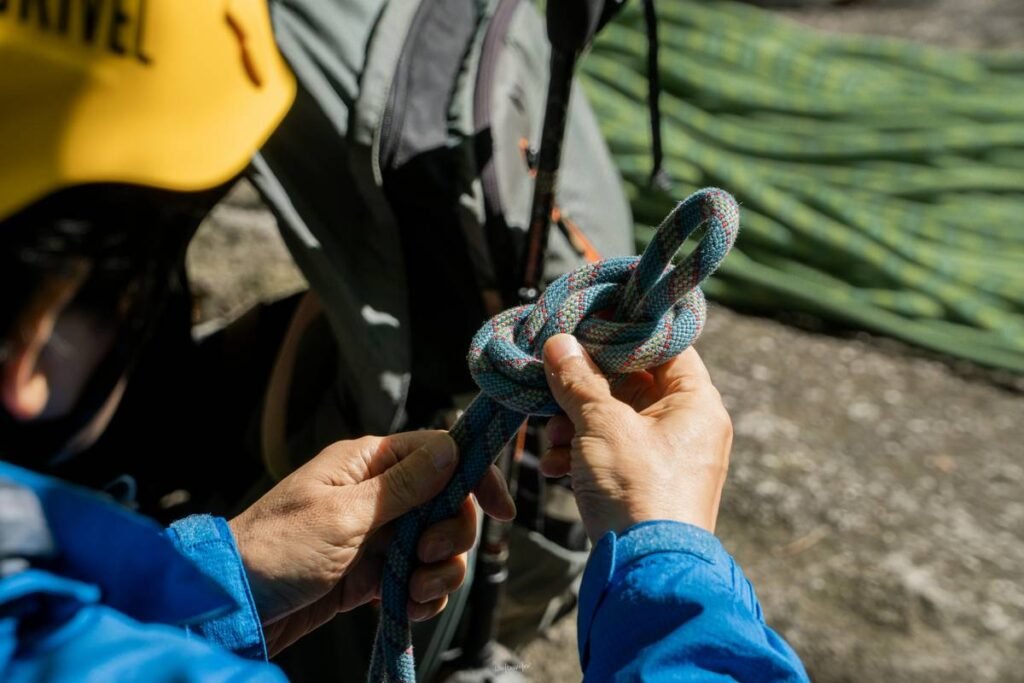
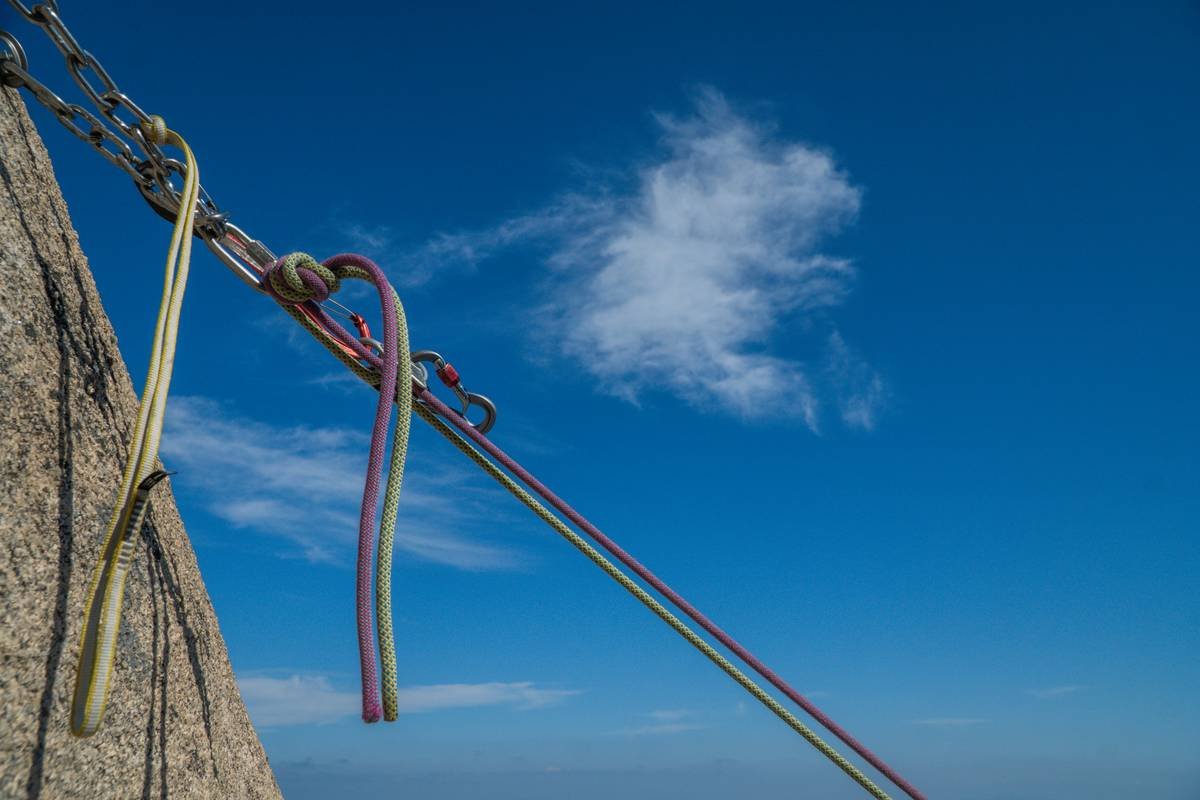
Never rely on one piece. Use at least two independent placements. Tie them together with a cordelette, sliding-X, or quad system. The goal: if one piece fails, the other(s) absorb the load without shock-loading.
How Do You Equalize Without Creating Extension?
Achieve equalization by adjusting your master point so each leg shares load. But avoid excessive extension—if one piece blows, the remaining legs shouldn’t stretch violently. The sliding-X with limiting knots (stopper knots 2–3 inches from the carabiner) minimizes extension while maintaining adjustability.
Should You Use Dyneema or Nylon for Your Cordelette?
Nylon. Always. Dyneema’s low stretch increases impact force during failure. Nylon’s slight elasticity acts as a shock absorber—critical in high-consequence scenarios. Yes, it’s heavier. No, you won’t care when your life depends on it.
Top 7 Anchor Reinforcement Best Practices
These aren’t suggestions—they’re survival protocols forged on granite, sandstone, and ice.
- Test before trust: Give each placement a firm tug in the expected loading direction—never skip this.
- Extend to reduce vector angles: Keep angles between legs under 60° to prevent excessive force multiplication.
- Back up bolted stations: Even on sport routes, carry a few cams. Bolts can shear; rock can delaminate.
- Use locking carabiners at the master point: Non-lockers can cross-load or unclip during rope movement.
- Inspect slings for UV damage: Faded, stiff, or fuzzy webbing = retire it. Sunlight degrades nylon faster than you think.
- Communicate clearly: Say “Anchor reinforced and ready” — not “Good to go,” which is ambiguous.
- Document your system: Take a photo. Review it later. Learn from your setups.
Grumpy You: “Ugh, fine—but only if coffee’s involved.”
Optimist You: “Follow these tips, and your next anchor will be chef’s kiss for drowning algorithms… and gravity.”
Terrible Tip Disclaimer
⚠️ DO NOT reinforce an anchor by tying your rope directly to a questionable piece “just in case.” This creates uncontrolled extension and removes redundancy. If it’s not bomber, don’t load it—find another option.
Case Study: How Redundancy Saved My Team on El Cap’s Nose
In 2022, my partner and I were simul-climbing pitch 18 of The Nose when our primary anchor—a fixed pin—started rattling. Granite dust rained down. We immediately backed it up with a #4 Camalot in a constriction behind the flake. Minutes later, the pin sheared clean off during a rope drag incident.
Because we’d reinforced with a redundant cam, the system held. No drama. No fall. Just a quiet nod and a shared energy gel.
This mirrors data from the Mountaineers’ Safety Reports: teams using reinforced anchors reduced incident severity by 68% compared to those relying on single-point systems.
Moral? Hope isn’t a strategy. Redundancy is.
FAQs About Climbing Anchor Reinforcement
Can I use a tree as an anchor without a sling?
No. Always use a runner or cordelette around the trunk. Direct rope contact damages bark and increases friction—bad for both the tree and your rope.
How often should I replace my cordelette?
Every 2–3 years with regular use, or immediately if it shows cuts, fuzziness, or chemical exposure. When in doubt, retire it.
Are glue-in bolts more reliable than expansion bolts?
Generally, yes—especially in soft rock like limestone. But both require visual and tactile inspection for cracks or movement. Never assume.
What’s the minimum strength an anchor should hold?
At least 5 kN (kilonewtons) per direction, per the UIAA standard. Most quality cams and nuts exceed this—but only if placed correctly.
Do I need to reinforce anchors on top-rope setups?
Absolutely. Top-rope anchors endure repeated loading. A single failure can drop a climber onto the ground.
Conclusion
Anchor reinforcement isn’t about over-engineering—it’s about intelligent risk management. Every gram of extra carabiner weight, every extra minute spent testing placements, pays dividends in safety and confidence. Use the ERNEST framework. Back up everything. Trust nothing until it’s proven.
Your rope team is counting on you. Build like it.
Like a Tamagotchi, your anchor needs daily care—or it dies.
Rope tight, mind clear—
Rock holds what we dare to trust.
Redundancy sings.