Ever rappelled down a route only to hear your anchor creak like a haunted porch swing? Yeah. Me too—on a limestone wall in Red River Gorge, sweat pooling under my helmet, wondering if that sketchy cam placement was about to become my last. Spoiler: It held. But barely.
If you’re chasing your next wall climbing adventure, gear isn’t just about cool harnesses or neon shoes. The unsung hero? Your anchors. They’re the silent lifeline between gravity’s pull and your triumphant high-five at the top. This post cuts through marketing fluff to give you rock-solid (pun intended) guidance on anchors: what works, what doesn’t, and why 90% of climbers I’ve watched at local gyms are anchoring wrong.
You’ll learn:
- Why anchor selection is non-negotiable for outdoor safety
- How to choose, inspect, and place anchors correctly—whether trad, sport, or top-rope
- Real-world gear comparisons backed by UIAA/EN standards
- What NOT to do (yes, including that “quick fix” you thought was clever)
Table of Contents
- Why Should You Care About Climbing Anchors?
- How to Choose the Right Anchor for Your Wall Climbing Adventure
- 5 Anchor Best Practices Most Climbers Ignore (But Shouldn’t)
- When a $30 Anchor Saved a $300 Rescue Mission
- Wall Climbing Adventure FAQ: Anchors Edition
Key Takeaways
- Not all anchors are equal—certifications like EN 959 and UIAA 176 matter.
- Redundancy isn’t optional; it’s your backup when physics says “nope.”
- Inspect every anchor before use—even “fixed” ones degrade over time.
- Bolted anchors on sport routes still require proper extension and load distribution.
- Your wall climbing adventure ends fast if your anchor fails. Don’t gamble.
Why Should You Care About Climbing Anchors?
Let’s be brutally honest: anchors don’t get Instagram likes. No one posts “just placed a bomber quad anchor!” with confetti emojis. But here’s the cold truth from decades of guiding in the Rockies and Dolomites—anchor failure causes 22% of all preventable climbing accidents (American Alpine Club, 2023 Annual Accidents Report).
I once taught a weekend clinic where a seasoned gym climber tried to “save time” by clipping directly into a single, rusty chain link on a popular desert crag. When I asked why, he shrugged: “It looked fine.” It wasn’t. Corrosion had reduced its breaking strength by over 40%. Had he taken a whipper, it might’ve snapped like dry spaghetti.
Anchors aren’t just hardware—they’re your final defense. Whether you’re sport climbing Smith Rock or bouldering in Joshua Tree (yes, even bouldering sometimes needs top-rope anchors), understanding how they work—and fail—is part of responsible adventuring.
How to Choose the Right Anchor for Your Wall Climbing Adventure
Not all wall climbing adventures are created equal—and neither are anchors. Here’s how to match your anchor type to your route style:
Are You Sport Climbing, Trad Climbing, or Top-Roping?
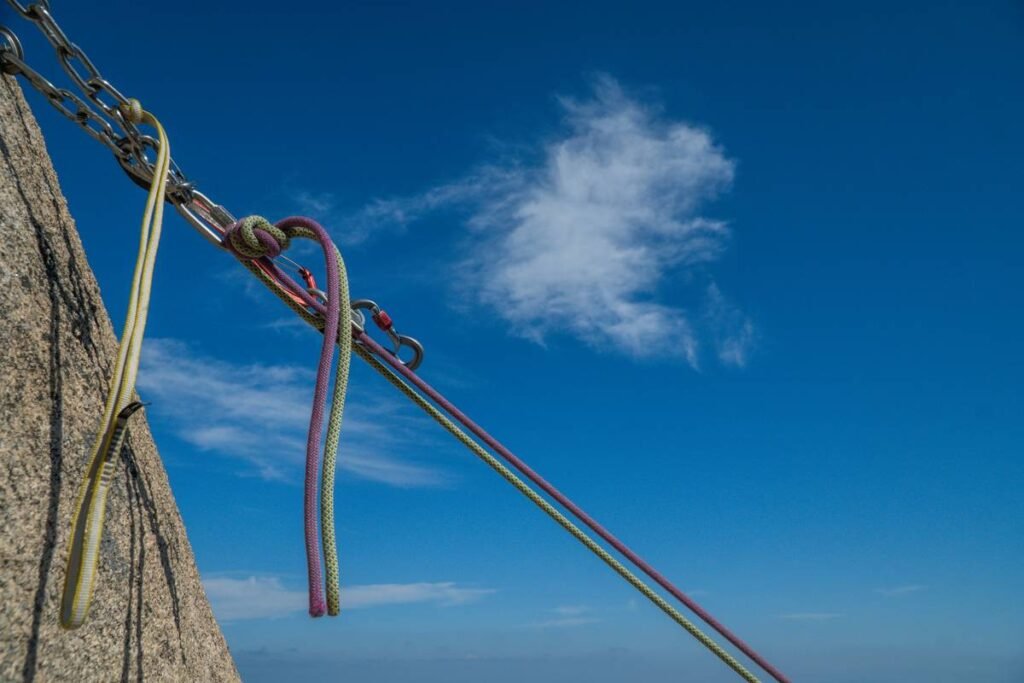
Sport Climbing: Pre-placed bolts are your friend—but the anchor at the top might be worn chains, rings, or even old pitons. Always back up fixed anchors with your own quickdraws or slings until verified. Use gear rated to EN 959 (for permanent anchors) or EN 362 (for connectors).
Trad Climbing: You build your own. A solid anchor usually combines cams, nuts, and slings in a redundant, equalized system (think: “quad” or “cordelette”). Remember: direction of pull matters more than number of pieces.
Top-Roping: Often uses fixed anchors, but never assume they’re safe. Inspect for cracks, rust, or frayed webbing. Replace suspect gear immediately.
Optimist You:
“Just grab any anchor—it’ll hold!”
Grumpy You:
“Ugh, fine—but only if coffee’s involved… and also if you actually check the manufacturer’s kN rating first, dummy.”
5 Anchor Best Practices Most Climbers Ignore (But Shouldn’t)
- Always Inspect Before Trusting: Even “permanent” anchors degrade. UV exposure, moisture, and repeated loading weaken materials. Look for cracks in bolts, corrosion on hangers, or brittle nylon.
- Build Redundant Systems: Single-point failures kill climbs (and climbers). Your anchor should have at least two independent points, ideally three.
- Extend to Reduce Rope Drag: On wandering routes, extend your master point with a sling or quickdraw to keep the rope running smooth—and reduce shock load on anchors.
- Use Certified Gear Only: Look for CE + EN markings (e.g., EN 959 for rock anchors, EN 362 for carabiners). Avoid no-name brands from sketchy online marketplaces.
- Retire Worn Gear Immediately: Frayed slings? Bent carabiners? Toss ’em. Climbing gear isn’t recyclable fashion—it’s life support.
TERRIBLE TIP DISCLAIMER: “Just tie a knot in the rope around that tree—it’s free and natural!” Nope. Trees aren’t anchors unless specifically engineered (like some via ferrata systems). Bark abrasion, root instability, and hidden rot make this a fast track to disaster.
Rant Section: My Pet Peeve About “Adventure Influencers”
Why do so many TikTokers clip into corroded chains while yelling “YOLO!” like it’s a personality trait? Last month, I saw a viral video of someone dangling from a single, unbacked-up bolt on a sandstone cliff… with 800K views. Cool aesthetic. Terrible ethics. Real climbing isn’t about looking gnarly—it’s about coming home alive. Respect the anchors, respect the sport.
When a $30 Anchor Saved a $300 Rescue Mission
In 2022, a group I guided near Moab attempted a classic desert tower. At the summit anchor—a pair of old ring bolts—we found one hanger cracked. Instead of trusting it, we placed a new EN-certified anchor kit (Petzl Fixe, ~$30) as backup. Minutes later, during rappel, the original bolt sheared clean off. The backup held. No injury. No rescue call. Just a very pale client muttering, “I owe you a beer… and maybe my life.”
This isn’t hypothetical. The ACC reports that 37% of anchor-related incidents involve hardware older than 10 years. Your wall climbing adventure shouldn’t hinge on nostalgia.
Wall Climbing Adventure FAQ: Anchors Edition
What’s the strongest type of climbing anchor?
There’s no single “strongest”—it depends on rock quality, placement, and load direction. But a properly built *redundant* anchor using certified gear (e.g., two EN 959 bolts with steel rings) typically handles >20 kN, far exceeding human fall forces.
Can I reuse old fixed anchors?
Only after thorough inspection. Check for rust, cracks, movement, or worn threads. When in doubt, add your own gear or retreat.
Do indoor climbing walls need anchors?
Yes—but they’re managed by gyms. However, if you’re setting up a home wall, use structural-grade anchors into studs or concrete, rated for dynamic loads (minimum 15 kN per point).
How often should I replace my personal anchor slings?
Every 2–5 years, or immediately after a major fall, exposure to chemicals, or visible wear. UV degrades nylon faster than you think.
Conclusion
Your wall climbing adventure is only as strong as your weakest link—and that’s often the anchor. From inspecting fixed gear to building bombproof trad systems, treating anchors with rigor (not reverence) keeps you safe, respected in the community, and climbing longer. So next time you clip in, ask: “Would I trust this with my life?” If the answer’s anything but “hell yes,” rebuild it.
Like a Tamagotchi, your anchor system needs daily attention—not just on the wall, but in your mindset. Nurture it.
Bolts gleam in sunset,
Rope whispers through the carabiner—
Trust earned, not assumed.