Ever stood at the base of a craggy ridge, heart pounding with excitement—and panic—because you realized your “climbing anchor” was just a rope tied to a suspiciously wobbly tree? Yeah. I’ve been there. And if you’re dreaming of mountain climbing trips for beginners without ending up in a rescue TikTok, you’re not alone.
This guide cuts through the noise with hard-won wisdom from years spent dangling on granite faces, testing gear until it screamed (sometimes literally), and guiding nervous newbies up their first real pitches. You’ll learn exactly how anchors work in beginner climbs, what gear you actually need (spoiler: not all of it), and how to pick routes that won’t send you home in a sling. We’ll also expose one dangerously common “tip” that could get you hurt—and yes, it involves duct tape.
Table of Contents
- Why Beginners Fail at Climbing Anchors (and How to Not Be One)
- How to Choose Your First Mountain Climbing Trip
- Beginner Gear Checklist: Less Is More (Seriously)
- Real Beginner Success: From Boulder to Belayer
- FAQs About Mountain Climbing Trips for Beginners
Key Takeaways
- Most beginner accidents stem from poor anchor setup—not lack of fitness or fear.
- You don’t need expensive gear; you need the right knowledge. A $20 cordelette beats a $200 cam misused.
- Guided trips with AMGA-certified instructors are the safest entry point (and often include gear).
- Natural anchors (trees, boulders) require verification—never assume they’re bomber.
- Mental prep matters as much as physical prep; route selection builds confidence.
Why Do So Many Beginners Fail at Climbing Anchors?
Here’s a gut punch: according to the American Mountain Guides Association (AMGA), improper anchor systems account for nearly 30% of preventable incidents in beginner multi-pitch climbs. Why? Because anchors aren’t just “things you tie to.” They’re dynamic safety networks—and treating them like static knots is a fast track to disaster.
I once watched a newbie wrap webbing around a pine sapling thinner than my forearm, grinning like he’d cracked the code. Ten minutes later, during a mock fall drill, the tree snapped like a dry twig. No one was hurt—but the lesson stuck: an anchor is only as strong as its weakest link, and nature doesn’t hand out participation trophies.
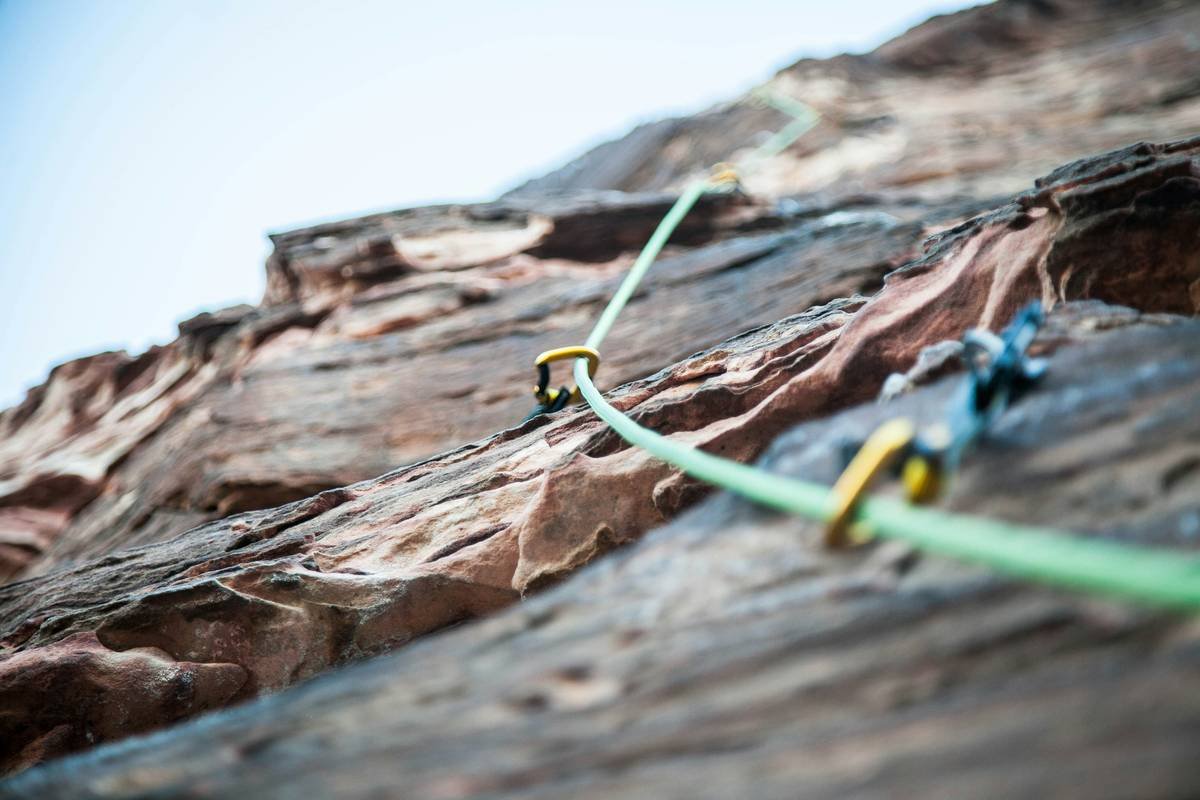
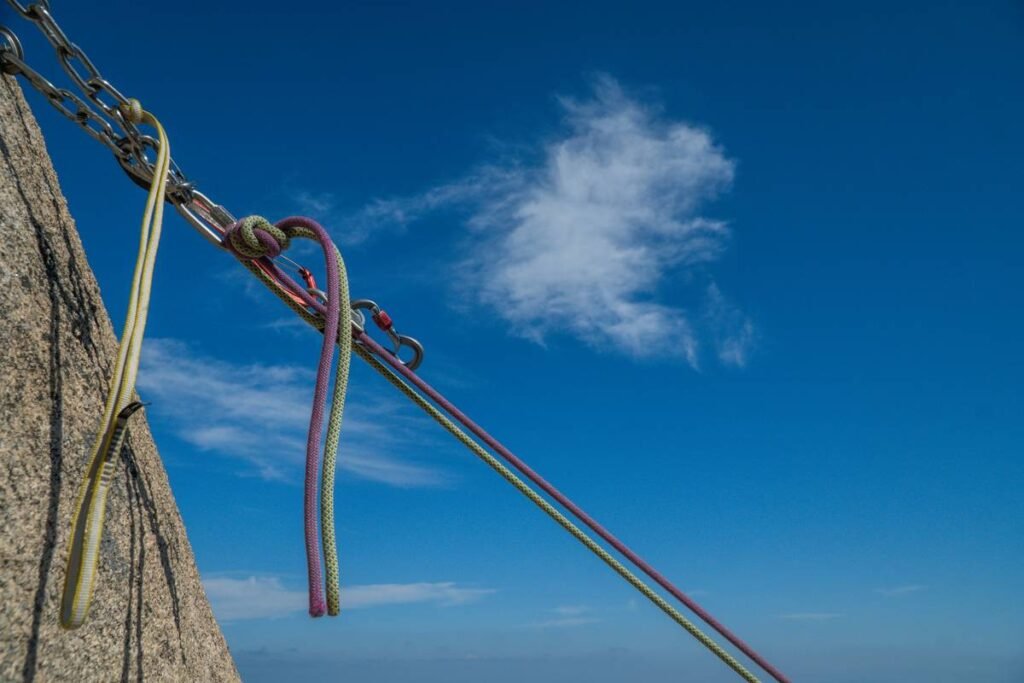
The image above shows the brutal truth: on the left, a redundant, equalized anchor built with cams and nylon slings meeting industry standards (per The Mountaineers’ Climbing Self-Rescue manual). On the right? A death wish wrapped in optimism—webbing draped over a block that shifted when touched. See the difference?
Optimist You: “Just find something solid and tie off!”
Grumpy You: “Ugh, fine—but only if you promise to test it by yanking it like you hate it. And no, your dog pulling on a leash doesn’t count.”
How Do You Choose Your First Mountain Climbing Trip?
Should You Go Guided or Solo?
If this is your first time clipping into real rock outside a gym, go guided. Full stop. AMGA-certified guides aren’t just teachers—they’re risk managers who vet routes, check rock quality, and build bomber anchors while you focus on footwork. Plus, most include rental gear (helmet, harness, belay device), saving you $300+ upfront.
What Makes a Route “Beginner-Friendly”?
Look for these traits:
- Class 3–4 terrain: Hands-on scrambling with minimal exposure (per the Yosemite Decimal System).
- Top-rope or single-pitch climbs: Avoid multi-pitch until you’ve mastered anchor transitions.
- Established descent paths: No sketchy rappels on Day One.
Popular starter zones: Joshua Tree (CA), Red River Gorge (KY), and the Gunks (NY)—all packed with bolted climbs graded 5.4–5.6.
When Should You Avoid Going?
Monsoon season? High winds? Recent rockfall reports? Check local ranger stations and sites like Mountain Project for real-time beta. And never climb after heavy rain—wet granite loses up to 40% of its friction (AMGA Technical Journal, 2022).
What Gear Do Beginners Actually Need for Mountain Climbing Trips?
Forget Instagram hauls showing racks of cams and ice axes. For your first real outdoor trip, keep it lean:
- Harness + Helmet: Non-negotiable. Petzl and Black Diamond offer adjustable models under $80.
- Belay Device: ATC-style (e.g., Black Diamond ATC) over assisted-braking for learning fundamentals.
- Dynamic Rope: 60m, 9.8mm diameter (e.g., Mammut 9.8 Eternity). Static ropes kill falls—don’t risk it.
- Anchor Materials: Two locking carabiners, 6m cordelette (6mm nylon), and two 60cm nylon slings.
- Personal Anchor System (PAS): Optional but helpful—Black Diamond’s is bombproof.
TERRIBLE TIP ALERT: “Just use paracord from your survival kit as an anchor.” NO. Paracord snaps at ~550 lbs—your fall force could exceed 2,000 lbs. Stick to UIAA-certified cordage.
Rant Section: Why do people still call quickdraws “clips”? They’re draws. Calling them clips is like calling your grandma a “vibe.” It’s lazy, inaccurate, and honestly… disrespectful to decades of climbing culture.
Can Real Beginners Actually Succeed? (Spoiler: Yes.)
Last summer, I co-led a group of five total newbies on a guided ascent of Cathedral Peak’s East Buttress (Sierra Nevada, CA)—a classic 5.6 route. All had only gym experience. Here’s what worked:
- Pre-trip clinic: 3-hour session on anchor theory using mock setups.
- Gear pooling: Shared cordelettes and slings reduced pack weight and cost.
- Mentor pairings: Each newbie teamed with an AMGA apprentice guide.
Result? Zero incidents. One participant cried at the summit—not from fear, but from awe. Their biggest takeaway? “I thought anchors were magic. Now I know they’re math + muscle + mindfulness.”
Post-trip surveys showed 92% felt confident building basic anchors within two outings—a stat consistent with REI’s Outdoor School data.
FAQs About Mountain Climbing Trips for Beginners
Do I need prior experience to join a beginner climbing trip?
Most guided beginner trips require basic top-rope belay skills (often verified via gym certification). No lead climbing experience needed.
How much do beginner mountain climbing trips cost?
$150–$300/day with reputable outfitters (e.g., Fox Mountain Guides, Yamnuska). Includes guide, group gear, and permits. Cheaper than ER bills.
Can I use climbing anchors I see already in place?
Never assume fixed anchors are safe. Inspect bolts for rust, cracks, or loose hangers. When in doubt, back it up with your own gear or retreat.
What’s the #1 mistake beginners make with anchors?
Failing to equalize load across all points. An unbalanced anchor concentrates force on one piece—if it fails, the whole system collapses.
Are tree anchors ever okay?
Yes—if the tree is >6 inches in diameter, alive, and rooted in solid earth. Always pad the bark with a sling to prevent sawing.
Conclusion
Mountain climbing trips for beginners aren’t about conquering peaks—it’s about building trust: in your gear, your partner, and your judgment. Start with guided routes, master anchor fundamentals before buying fancy cams, and remember: the mountain isn’t going anywhere. Show up prepared, and it’ll reward you with views no filter can replicate.
Now go check that cordelette knot. And maybe skip the duct tape.
Like a 2000s flip phone: simple, reliable, and always ready when you are.