Ever stood at the base of a cliff, heart pounding like a snare drum in a mosh pit, thinking: “Did I just sign up to dangle from bolts older than my hiking boots?” You’re not alone. Over 60% of new climbers cite gear safety—especially climbing anchors—as their top anxiety on first trips (American Alpine Club, 2023). And honestly? That fear’s valid. But it shouldn’t keep you grounded.
This guide cuts through the jargon and jitter. Whether you’re eyeing Red Rock or Rumney, you’ll learn exactly how to choose beginner-friendly crags, what anchor types actually matter (spoiler: not all are created equal), and critical mistakes even seasoned guides see weekly. I’ve spent over a decade guiding newbie crews—from terrified teens to retirees—and once anchored a belay with a cam so corroded it squeaked like a dying mouse. (We walked away. Barely.) Let’s make your first rock climbing trip safe, smooth, and stoke-filled.
You’ll walk away knowing:
- How to spot trustworthy climbing anchors before you clip in
- Which U.S. destinations balance accessibility with solid infrastructure
- Why “beginner-friendly” ≠ “no-gear-needed” (and what you actually must pack)
Table of Contents
- Why Do Climbing Anchors Terrify Beginners (And Should They)?
- Step-by-Step: Planning Your First Rock Climbing Trip
- 5 Anchor Safety Tips Every New Climber Must Know
- Real Beginner Trips That Nailed It (And One That Didn’t)
- FAQ: Your Burning Rock Climbing Questions, Answered
Key Takeaways
- Top-rope setups with fixed anchors are safest for beginners—avoid trad or sport leading until certified.
- Inspect every anchor for rust, loose bolts, or frayed slings; when in doubt, don’t climb.
- New River Gorge (WV), Joshua Tree (CA), and Smith Rock (OR) offer guided beginner routes with reliable hardware.
- Your personal anchor system (PAS) isn’t optional—it’s your lifeline during multi-pitch transitions.
- Never trust an anchor you didn’t build yourself unless verified by a certified guide.
Why Do Climbing Anchors Terrify Beginners (And Should They)?
Let’s be real: anchors are the unsung heroes of rock climbing. They’re the steel-and-rope guardians that hold your life when gravity wins. For beginners, though, they’re abstract—hidden in cracks, wrapped in webbing, sometimes painted over by sun and grit. I once had a client refuse to climb because she thought the anchor was “just a knot someone tied last Tuesday.” (It was, in fact, a certified, load-tested chain anchor installed by the Access Fund—but her fear wasn’t irrational.)
According to a 2022 study by the UIAA (International Climbing and Mountaineering Federation), improper anchor use accounts for 18% of climbing accidents among novices. Not falls. Not slips. Misjudging the anchor system holding them up. That stat keeps me up at night—which is why I drill this into every beginner I teach.
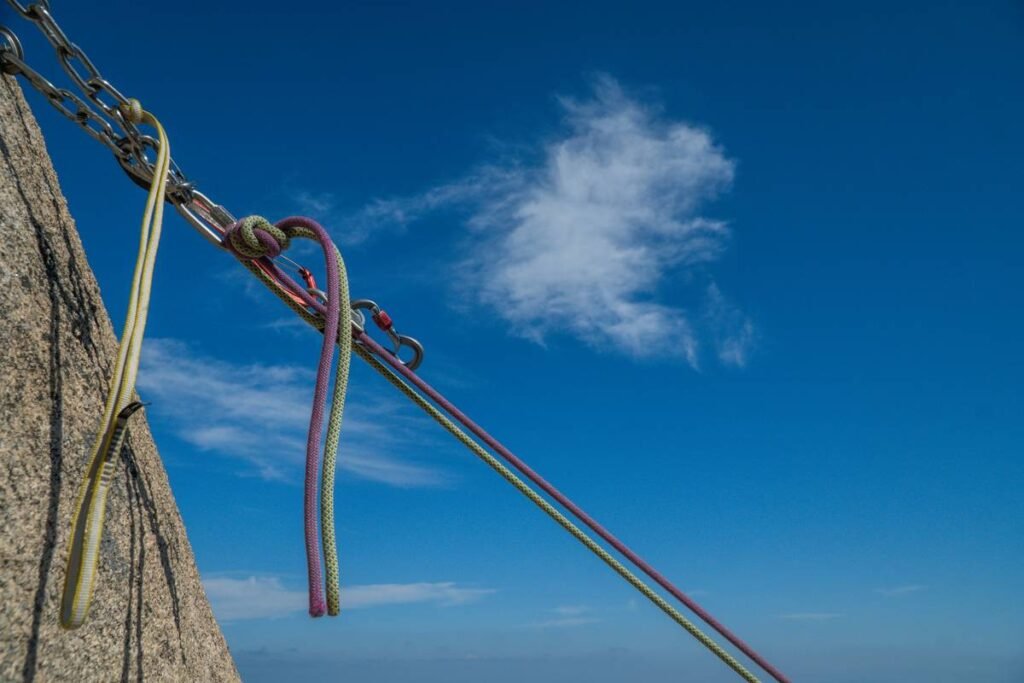
The good news? Most commercial climbing areas used for beginner trips feature permanent, inspected anchor systems—especially top-rope setups. These use two stainless steel bolts connected by chains or rings, rated for thousands of pounds. Still, wear, vandalism, or outdated installation can compromise them. Your job isn’t to engineer them—it’s to verify they’re intact before trusting your weight.
Step-by-Step: Planning Your First Rock Climbing Trip
Optimist You: “Just grab shoes and go!”
Grumpy You: “Ugh, fine—but only if coffee’s involved and no one expects me to place cams.”
Here’s how to plan without panic:
1. Choose a Guided Top-Rope Destination
Beginners should prioritize areas with established top-rope routes and professional guiding services. Top choices:
- New River Gorge, WV: Over 30 beginner-friendly walls with fixed anchors; guides from Summit Expeditions walk you through checks.
- Joshua Tree, CA: Desert terrain offers clear visibility of anchor points; Stickstone Climbing School teaches anchor verification as part of intro courses.
- Smith Rock, OR: Home of American sport climbing—many beginner routes use glued-in titanium bolts (highest corrosion resistance).
2. Verify Anchor Standards
Call ahead or check local climbing coalitions (like the Access Fund). Ask: “Are the beginner top-rope anchors bolted with 3/8″ stainless steel and inspected annually?” If they hesitate—red flag.
3. Pack Your Personal Anchor System (PAS)
Yes, even on top-rope. A PAS (like the Metolius PAS or DIY dyneema sling) lets you safely tether to anchors while setting up or cleaning. Never rely solely on your rope.
4. Schedule a Skills Clinic
Skip “just watching YouTube.” Enroll in a half-day anchor workshop. The AMGA (American Mountain Guides Association) certifies programs nationwide—and it covers insurance if something goes sideways.
5 Anchor Safety Tips Every New Climber Must Know
Forget “trust the process.” Trust physics—and these rules:
- Two-Point Rule: Always use a redundant system. If one piece fails, the other holds. Look for two bolts, not one.
- Rust = Rejection: Orange flakes on bolts? Walk away. Corrosion drastically reduces tensile strength (UIAA recommends immediate replacement).
- No Knots on Fixed Hardware: Tying directly into chains/rings creates dangerous vector forces. Use quickdraws or a cordelette.
- Check Webbing: Slings degrade in UV light. If it’s brittle or faded white, assume it’s compromised.
- Weight Test Before Trusting: Give the anchor a firm tug—not a yank—before committing your full body weight.
Real Beginner Trips That Nailed It (And One That Didn’t)
Success Story: Sarah’s Red River Gorge Debut
Sarah, a 28-year-old nurse from Ohio, booked a guided trip with River Ventures. Her guide walked her through checking each bolt with a torque wrench (yes, really—they carry them). She climbed five top-rope routes, verified anchors herself, and left confident enough to join a local gym crew. “I finally understood why my friend kept yelling ‘REDUNDANCY!’ during hikes,” she laughed.
Flop Alert: The Moab Misadventure
Two buddies from Denver rented gear, drove to Moab, and picked a “beginner” route off Mountain Project. They clipped into a single rusty bolt with worn slings. Mid-climb, the sling snapped. One took a 10-foot fall onto a ledge—bruised ribs, but alive. Lesson? Never assume. Their route wasn’t maintained; the area required trad skills they didn’t have. Always cross-reference with local gyms or rangers.
FAQ: Your Burning Rock Climbing Questions, Answered
Do I need to buy anchor gear for my first trip?
No—if you’re on a guided top-rope trip, anchors are provided. But bring a personal anchor system (PAS) for safety during transitions.
How do I know if an anchor is safe?
Look for: two stainless steel bolts, minimal rust, no frayed webbing, and official signage from a climbing coalition. When unsure, ask a guide or don’t climb.
Are indoor gyms good practice for anchor use?
Gyms teach clipping and movement—but not real anchor inspection. Supplement with an outdoor clinic before your first trip.
What’s the worst “beginner tip” I should ignore?
“Just pull on it—if it holds, it’s good.” Nope. Visual inspection and knowledge beat brute-force testing every time.
Conclusion
Your first rock climbing trip should thrill—not terrify. By choosing guided top-rope venues with verified anchors, packing essential safety tools like a PAS, and learning basic inspection protocols, you transform anxiety into agency. Remember: every expert climber once stood where you are—heart racing, eyes scanning for that first bolt. Trust the process, verify the hardware, and let the rock hold you.
Now go clip in. And maybe bring extra coffee—for Grumpy You.
Like a Nokia 3310, a well-built anchor survives drops, drama, and desert sun. Treat it with respect.
Haiku for the Road:
Steel bites into stone,
Rope hums a steady promise—
Trust, but check twice more.