Ever stood at the base of a crag, palms sweaty, heart thumping like your Fitbit just caught you pretending to hike… and realized you don’t even know which end of the rope to tie? Yeah. I was there—wearing brand-new climbing shoes, a $300 harness, and zero clue how an anchor actually holds my life.
If you’re new to rock climbing, it’s not just about strength or fancy gear—it’s about understanding the invisible safety net that keeps you from becoming a cautionary tale on someone’s GoPro reel. In this guide, we’ll cut through the fluff and walk you through the rock climbing basics for beginners, with laser focus on what actually matters: anchors, belaying, and not looking (or acting) like a total rookie.
You’ll learn:
- Why anchors aren’t “just bolts in the wall” (and how one mistake can end badly)
- The bare-minimum gear you need—no, you don’t need six carabiners before your first climb
- How to tie the only knot you truly need as a beginner (and why your gym instructor won’t let you leave without it)
- Real mistakes I’ve made (and seen others make) that almost ruined climbs—or worse
Table of Contents
- Why Do Climbing Anchors Matter So Much?
- Rock Climbing Basics for Beginners: Step-by-Step
- 5 Non-Negotiable Best Practices (Even If You’re “Just Top-Roping”)
- When Theory Met Granite: Real Anchor Lessons from the Field
- FAQs About Rock Climbing Basics for Beginners
Key Takeaways
- Top-rope anchors must be redundant, equalized, and secure—never improvised with webbing tied around sketchy trees.
- Learn the figure-eight follow-through knot first—it’s the industry standard for tying in.
- Beginners should start indoors at certified gyms; outdoor climbing requires mentorship or formal instruction.
- Always perform partner checks using the “B.A.S.I.C.” method before every climb.
- Trust nothing—not even that shiny bolt—until you’ve verified its integrity and purpose.
Why Do Climbing Anchors Matter So Much?
Let’s get brutally honest: anchors are boring until they fail. And when they do? People fall. According to a 10-year study by the American Alpine Club, improper anchor setup contributed to nearly 22% of all preventable climbing accidents between 2012–2022. That’s not a rounding error—that’s real people, real consequences.
I remember my third outdoor climb in Red River Gorge. My partner clipped into a single bolt labeled “TR” (top-rope), assumed it was bomber, and off we went. Later, a guide pointed out the bolt was part of an old sport route—not rated for top-roping forces. One hard fall, and it could’ve sheared right out. My stomach still drops thinking about it.
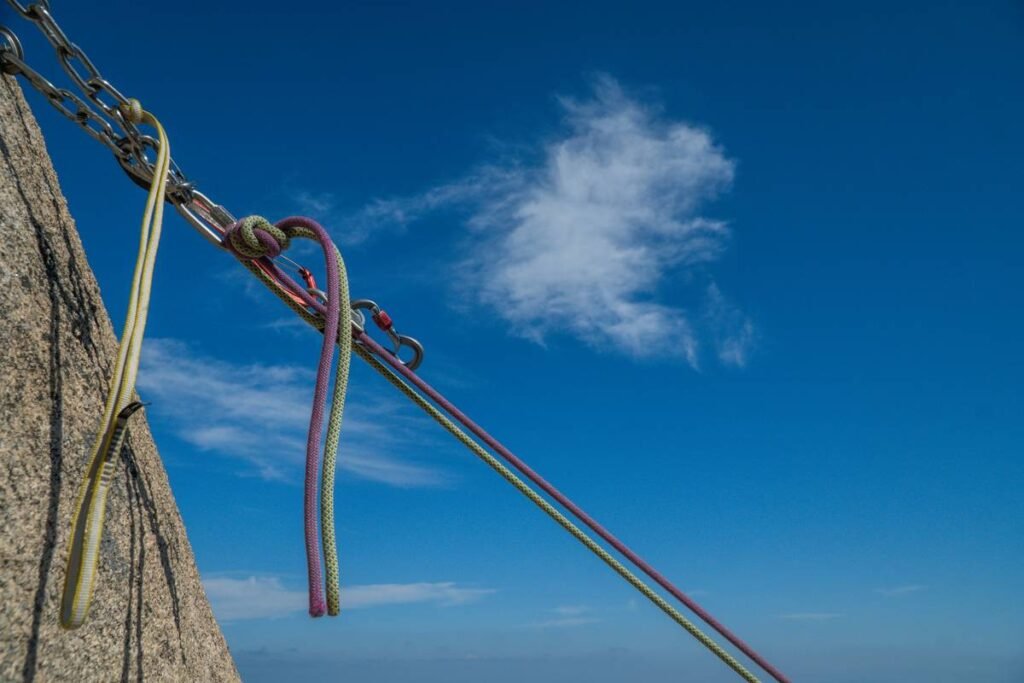
Anchors aren’t just “something up high.” They’re engineered systems that must handle dynamic loads, abrasion, and human error. Whether you’re using fixed bolts, slings around horns, or trad gear placements, the principles remain: redundancy, equalization, and extension limitation (the “RENE” principle taught by AMGA-certified guides).
Rock Climbing Basics for Beginners: Step-by-Step
What gear do I actually need to start?
Optimist You: “Just grab any rope and go!”
Grumpy You: “Ugh, fine—but only if you promise never to skip the harness check.”
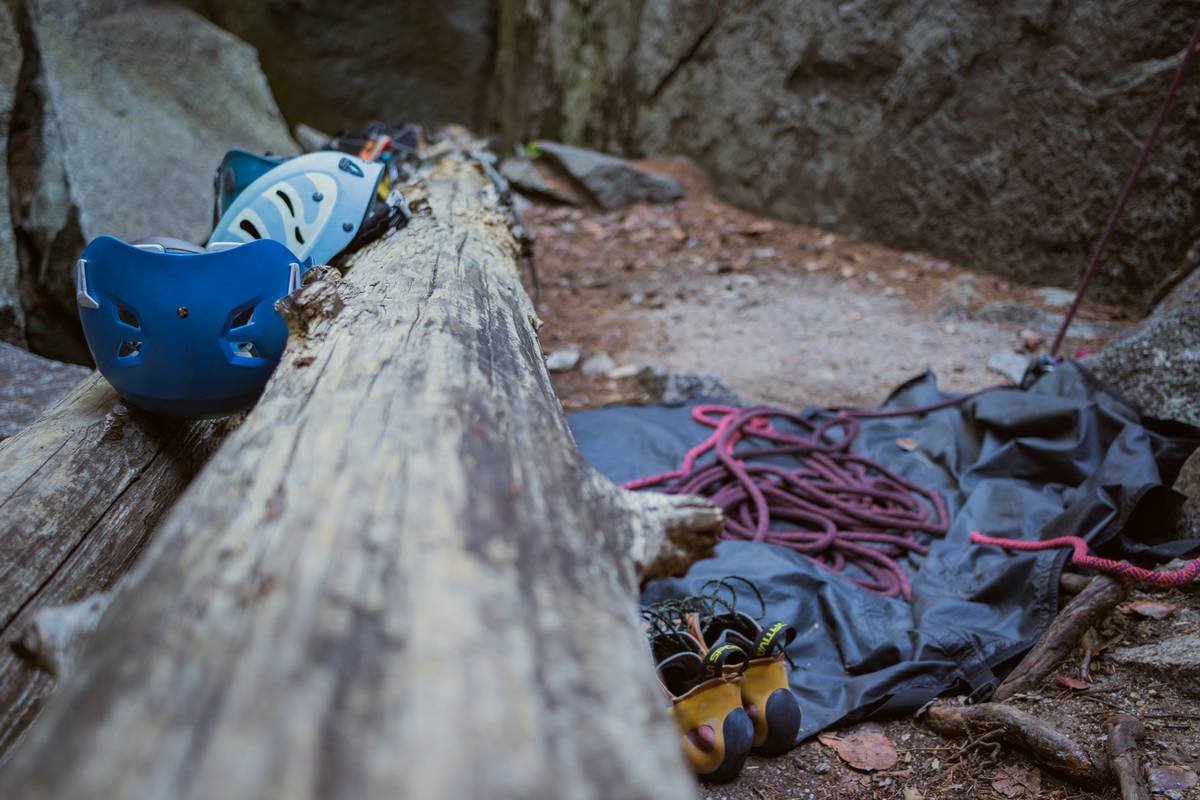
Forget Instagram hauls full of cams and nuts. For indoor or top-rope outdoor climbing, your starter kit is minimal:
- Climbing shoes – snug but not painful (rent first!)
- Harness – with a belay loop and gear loops
- Belay device – ATC or assisted-braking like a Petzl GriGri
- Locking carabiner – steel or aluminum, HMS/pear-shaped preferred
- Chalk bag – optional but helpful for sweaty-palmed humans
How do I tie in correctly?
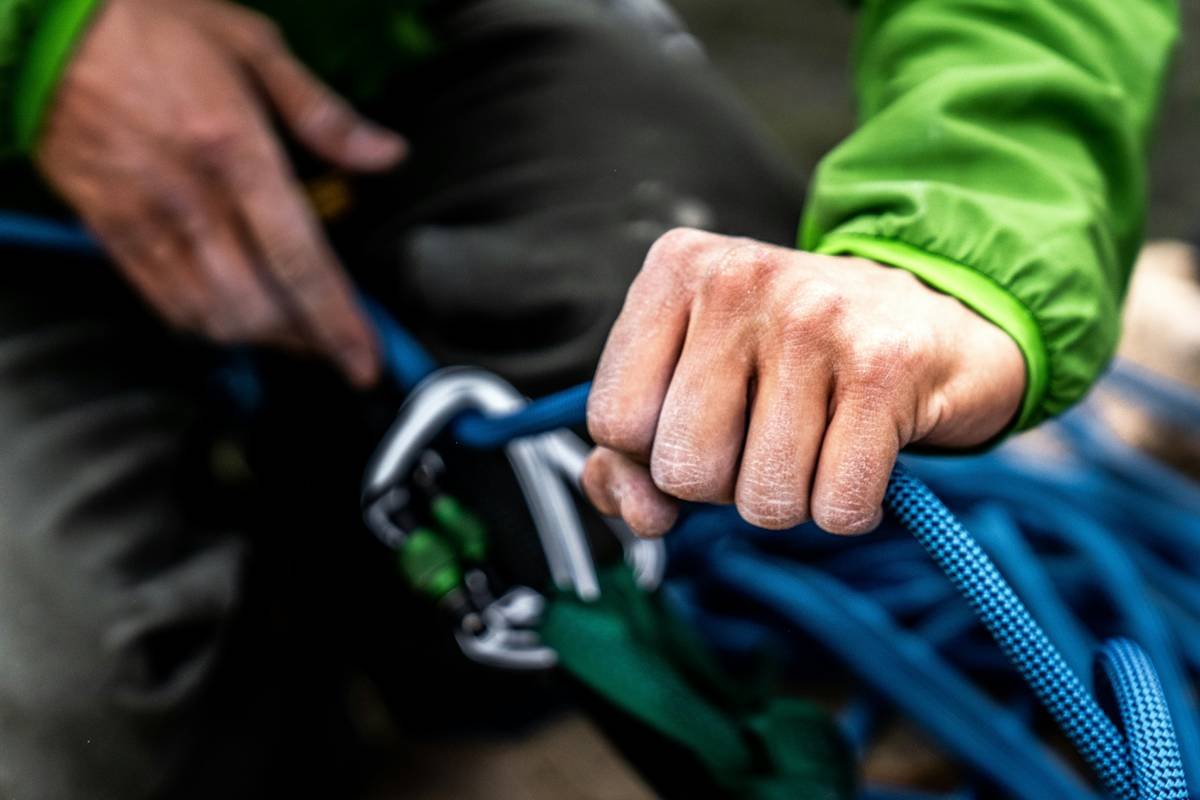
There’s one knot you must master: the figure-eight follow-through. Why? Because it’s strong, easy to inspect, and doesn’t jam under load like some alternatives.
Steps:
- Tie a figure-eight in the end of your rope (leave ~3 ft tail).
- Pass the tail through your harness tie-in points (waist + leg loops).
- “Follow through” the original knot, retracing its path exactly.
- Dress the knot—pull all strands tight so no loops are twisted.
- Leave a minimum 6-inch tail past the knot (per UIAA standards).
Pro tip: Always have your partner check your knot using the B.A.S.I.C. acronym:
B – Buckles doubled back?
A – Anchors secured?
S – Shoes tied?
I – Knot intact?
C – Carabiner locked?
5 Non-Negotiable Best Practices (Even If You’re “Just Top-Roping”)
- Never assume fixed anchors are safe. Check for corrosion, loose hangers, or mixed hardware (e.g., old zinc bolts next to stainless steel). When in doubt, don’t climb.
- Always use two anchor points for top-roping. Single-point anchors violate basic safety protocols unless professionally installed and certified (like at a commercial crag).
- Communicate clearly. Use standard calls: “On belay?” → “Belay on!” → “Climbing!” → “Climb on!” Silence isn’t golden—it’s dangerous.
- Lower slowly and controlled. Jerky lowers cause rope drag, heat buildup, and surprise unclipping. Keep tension smooth.
- Take a certified intro class. REI, local gyms, and AMGA-affiliated guides offer beginner courses covering knots, systems, and rescue basics. Worth every penny.
Terrible Tip Disclaimer:
“Just clip into whatever’s up there—it’s probably fine.” NO. This is how accidents happen. Trust your training, not luck.
Rant Section: My Pet Peeve
Why do people think chalk bags = fashion accessories? I’ve seen climbers wear them dangling from their hip like fanny packs while ignoring frayed slings or rusty bolts. Priorities, people! Your life depends on hardware integrity—not whether your chalk matches your laces.
When Theory Met Granite: Real Anchor Lessons from the Field
In 2021, I guided a group in Joshua Tree. One beginner asked why we built anchors with two cams instead of one. We demonstrated: with one cam placed poorly in brittle quartz monzonite, a simulated fall pulled it clean out. With two cams in opposition? The system held. His eyes widened—he finally got it.
Another time, at Smith Rock, a climber used a cordelette around a small pine tree for a top-rope anchor. Wind gusts caused rope sawing against bark. Within 20 minutes, the sling was abraded halfway through. A park ranger intervened just in time. Moral? Trees aren’t anchors unless they’re massive, alive, and protected with padding—and even then, avoid it.
Credible sources back this up: The American Mountain Guides Association and UIAA both emphasize anchor redundancy and inspection in all official curricula. Don’t wing it.
FAQs About Rock Climbing Basics for Beginners
Do I need to buy expensive gear right away?
No. Rent from gyms or REI first. Focus on learning before investing. Your first $200 should go toward a class, not cams.
Can I learn anchor building from YouTube?
Partially—but never practice outdoors without supervised experience. Misinterpreting anchor angles or force vectors can be fatal. Supplement videos with hands-on mentorship.
What’s the difference between sport climbing and top-roping?
In sport climbing, you lead and clip quickdraws into pre-placed bolts as you ascend. Top-roping means the rope runs from your harness up to an anchor above and back down to your belayer. Beginners should start with top-roping.
How do I know if a bolt is safe?
Look for stainless steel (not rusted), tight hangers (no wobble), and consistent installation (same style across the route). Suspect anything loose, corroded, or DIY-looking. When unsure, don’t climb.
Is climbing inherently dangerous?
Not if you respect systems and training. Statistically, you’re safer climbing than driving to the crag—if you follow protocols. Knowledge reduces risk dramatically.
Conclusion
Rock climbing basics for beginners aren’t about scaling El Cap on day one—they’re about building trust: in your gear, your partner, and your own judgment. Master the figure-eight, inspect every anchor, communicate like your life depends on it (because it does), and never stop asking questions.
Start slow. Climb smart. And remember: the best climbers aren’t the strongest—they’re the ones who come home safely, every time.
Like a Nokia 3310, solid anchors don’t need Wi-Fi—they just work.
Haiku:
Rope bites granite skin,
Anchor holds more than my weight—
It holds my return.