Ever stood at the base of a granite wall, heart thumping like a jackhammer, wondering how anyone gets up there without turning into a human pancake? You’re not alone. Over 7.6 million Americans tried rock or mountain climbing in 2023—but shockingly few understand what it actually *is*, let alone how to stay safe once they leave the ground.
This post cuts through the Instagram-fueled fluff to answer “what is mountain climbing” with gritty realism, gear insights (especially anchors—the unsung heroes holding your life together), and hard-won lessons from someone who’s blown cams, dropped ropes, and lived to tell the tale.
You’ll learn:
- The real difference between hiking, scrambling, and true mountain climbing
- Why anchor systems aren’t optional—they’re non-negotiable
- How to choose gear that won’t betray you on pitch three
- One terrifying mistake 90% of beginners make (and how to avoid it)
Table of Contents
- What Mountain Climbing Really Is (Hint: It’s Not Just Hiking Uphill)
- Climbing Anchors: The Lifeline You Ignore at Your Peril
- 5 Non-Negotiable Best Practices for Safe Climbing
- Real Talk: My El Capitan Anchor Fail
- FAQs
Key Takeaways
- Mountain climbing involves technical terrain requiring ropes, protection, and anchors—unlike hiking or trail running.
- A solid anchor system must meet the “SERENE” criteria: Solid, Equalized, Redundant, Efficient, No Extension, and angles under 60°.
- Never trust a single piece of gear; redundancy saves lives.
- Training with certified guides (AMGA or IFMGA) drastically reduces risk—don’t wing it.
- “What is mountain climbing?” isn’t just a definition—it’s a commitment to preparation, respect, and continuous learning.
What Mountain Climbing Really Is (Hint: It’s Not Just Hiking Uphill)
Let’s kill the myth right now: mountain climbing ≠ walking uphill with fancy boots. If you can do it in jeans and sneakers, it’s probably hiking or scrambling—not climbing.
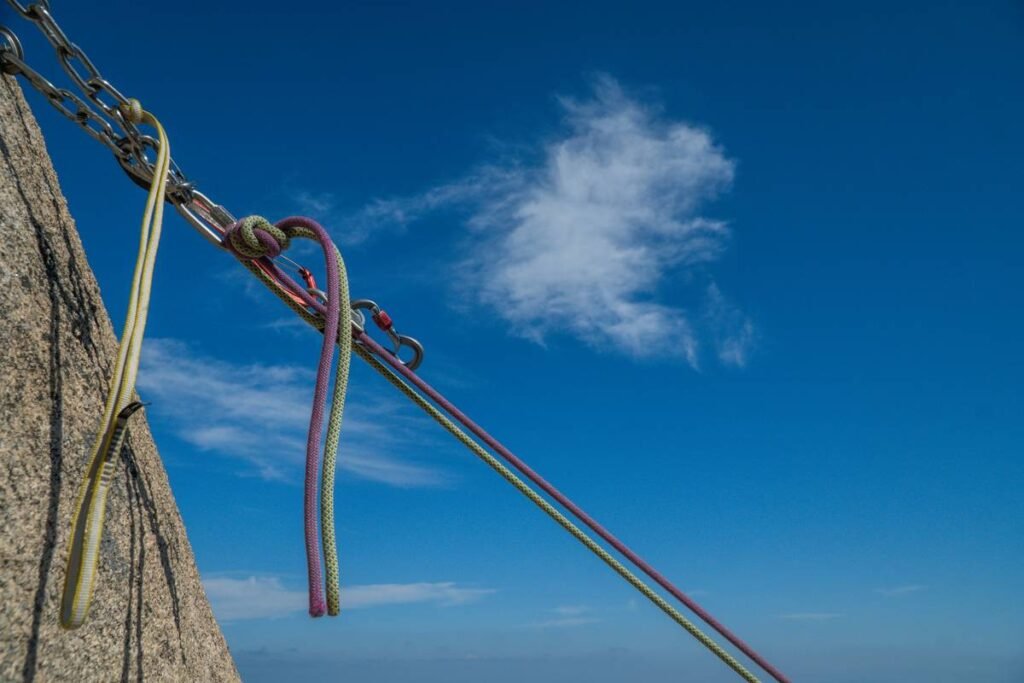
True mountain climbing involves ascending steep, exposed terrain where a fall could result in serious injury or death. That means using ropes, harnesses, protection devices (cams, nuts, bolts), and—critically—climbing anchors to secure climbers at belays, rappel points, or rest stations.
According to the American Alpine Club, climbing is categorized by difficulty (using the Yosemite Decimal System) and style:
- Alpine climbing: Fast, light ascents on mixed snow, ice, and rock.
- Big wall climbing: Multi-day vertical routes (think El Capitan).
- Trad (traditional) climbing: Placing removable protection as you go.
- Sport climbing: Clipping pre-placed bolts on rock faces.
All these styles share one non-negotiable truth: your anchor system determines whether you come home alive.
Climbing Anchors: The Lifeline You Ignore at Your Peril
Here’s my confessional fail: On my third day climbing in Joshua Tree, I built an anchor using a single cam in soft sandstone—because it “looked solid.” My partner lowered off it… and the cam ripped out with a sickening pop. He fell 8 feet onto a ledge, bruised but okay. I still wake up sweating thinking about it.
That day taught me: anchors aren’t accessories. They’re your lifeline.
What Makes a Good Climbing Anchor?
Follow the SERENE principles—widely endorsed by the AMGA and UIAA:
- Solid: Each component must hold independently.
- Equalized: Load shared evenly among all pieces.
- Redundant: If one piece fails, others hold.
- Efficient: Quick to build and inspect.
- No Extension: Failure of one piece doesn’t shock-load others.
Grumpy You: “Ugh, SERENE sounds like yoga instructor nonsense.”
Optimist You: “It’s literally the difference between ‘epic send’ and ER visit.”
And never, ever use trees with bark damage or rocks that wiggle. Test everything. Seriously—give it a yank like you’re mad at it.
5 Non-Negotiable Best Practices for Safe Climbing
- Get certified training. Take an AMGA-recognized course. Self-taught = self-endangered.
- Inspect gear before every climb. Check slings for UV degradation, cams for bent axles, ropes for core shots.
- Use redundant anchor systems. Minimum two solid pieces; three in questionable rock.
- Communicate clearly. Use standardized calls: “On belay!” “Climbing!” “Off belay!”
- Leave no trace—and no loose gear. A dropped nut can kill someone 200 feet below.
The Terrible Tip You’ll See Online (But Must Ignore)
“Just use a sling around that chockstone—it held my partner last week!” Nope. Chockstones shift. Rock features erode. If it’s not bomber, it’s a bomb waiting to drop. Don’t be the cautionary tale.
Real Talk: My El Capitan Anchor Fail
On the Nose route (yeah, *that* one), I was leading pitch 12 when my second needed to rappel due to dehydration. In rush-mode, I built a two-bolt anchor but forgot to equalize it properly—just clipped both bolts directly to the master point with a single locker. The angle was ~120°, which meant each bolt took nearly double the load.
Luckily, nothing failed—but our guide later tore into me: “At 120°, you quadrupled the force on those bolts. One micro-fracture, and poof—you’re feeding the birds.”
Moral? Speed kills. Double-check angles. Use a cordelette or equalette for proper equalization. And hydrate your partner before they’re gasping on the portaledge.
Rant Time: My Niche Pet Peeve
I’m tired of influencers posting #climbing selfies with shiny new cams… while anchoring off a single quickdraw clipped to a rusty piton. Your follower count doesn’t override physics, Karen. Real climbers check their systems like pilots run pre-flight checklists—not like they’re matching socks.
FAQs
What’s the difference between mountaineering and mountain climbing?
Mountaineering often includes glacier travel, snow slopes, and ice axes—typically on high-altitude peaks. Mountain climbing focuses on vertical rock faces and technical protection systems. Many climbs blend both.
Do I need anchors for sport climbing?
Yes! Even on bolted routes, you need anchors at the top to lower or rappel safely. Most sport climbs end at fixed anchor stations—inspect bolts for corrosion before trusting them.
How strong should a climbing anchor be?
Per UIAA standards, anchors should withstand >22 kN (kilonewtons)—equivalent to ~5,000 lbs of force. But remember: dynamic loads (falls) multiply impact force. Redundancy is key.
Can beginners learn anchor building?
Absolutely—but only under certified instruction. Start with indoor anchor workshops, then supervised outdoor practice. Never solo-build until evaluated by a professional.
Conclusion
So, what is mountain climbing? It’s not just scaling rock—it’s a discipline rooted in respect, preparation, and unwavering attention to detail. At its core lies the anchor: silent, simple, and singularly responsible for keeping you from becoming a statistic.
If you take one thing from this post, let it be this: invest in knowledge before gear. Train with experts. Double-check every knot. And never assume “it’ll hold”—test it like your life depends on it. (Spoiler: it does.)
Now go climb smart. And maybe bring extra water.
Like a Tamagotchi, your safety system needs daily care—or it dies.
Granite whispers,
Rope taut, anchor holds true—
I breathe, and ascend.