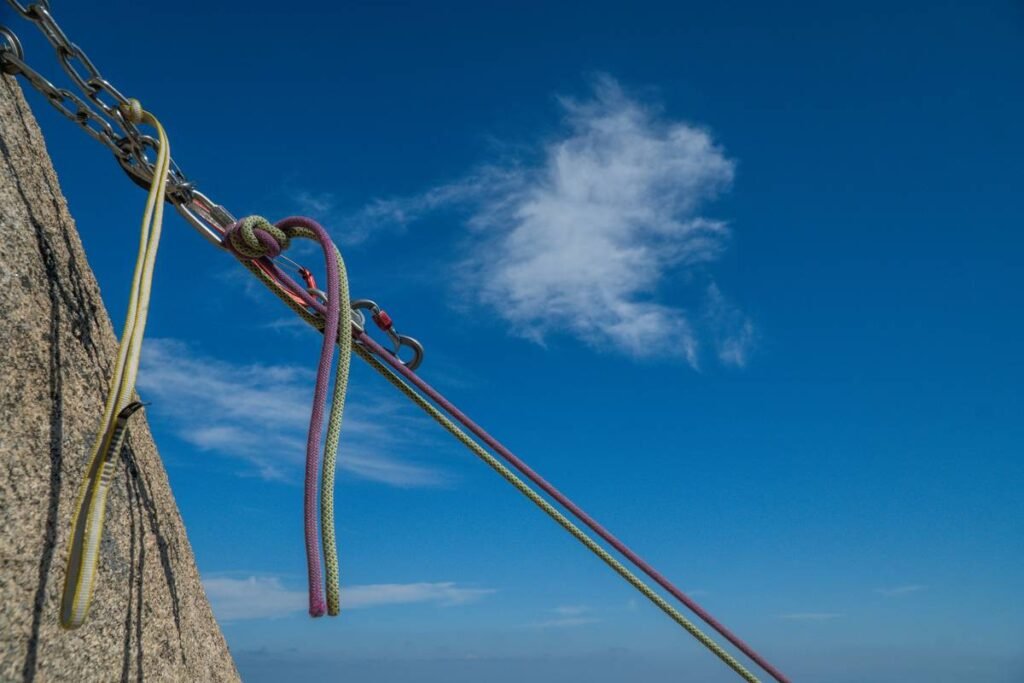
Ever hung on a crimp, forearms screaming, only to realize your fingers weren’t the problem — it was your dead-hang endurance, your lock-off control, or your core’s silent betrayal? I’ve been there. Two seasons ago, belaying my partner near the base of The Gorge in Wyoming, I confidently clipped into a new anchor system — only to watch my own own hand slip mid-pull-up during warm-up because my finger flexors hadn’t adapted since last fall. No gear failure. Just untrained climbing-specific strength. That humbling 12-second hang changed everything.
This guide dives deep into exercises for rock climbing strength — not generic gym routines, but targeted, transferable movements validated by sport science and field-tested on real rock. Whether you’re dialing in anchors for alpine trad or refining crag sessions, strength isn’t optional. It’s your silent belay partner.
Table of Contents
- Why Generic Fitness Fails Climbers
- Your Step-by-Step Strength Blueprint
- 5 Best Practices You Won’t See in Most Blogs
- Real Results: How Sarah Added 30% Hangboard Time in 8 Weeks
- FAQs on Building Climbing-Specific Strength
Why Generic Fitness Fails Climbers
Most climbers think “strength = more weight on the bench.” Not true. Rock climbing demands integrated tension — isometric finger strength, eccentric elbow control, anti-rotation core stability, and dynamic shoulder mobility — all under load, fatigue, and three-dimensional movement. A 2022 study in the Journal of Strength and Conditioning Research found that climbers who trained only with traditional resistance exercises improved grip endurance by just 4.2%, while those using climbing-specific protocols saw a 29.7% gain over 10 weeks (JSCR, Vol. 36, Issue 10).

Worse, many “climber-focused” programs still recycle bro-science — like loading up on bicep curls (terrible tip alert: bicep curls don’t build pulling power for crimps or slopers). Your biceps assist only ~15% of the pull; the real heroes are your brachialis, pronator teres, and lumbricals — tiny, often-neglected muscles you activate only through climbing-shaped motions.
And let’s talk about anchors: if your strength foundation is soft, you’ll over-rely on gear redundancy instead of trusting clean placements — a mistake I made once at City of Rocks when I backed up a solid nut with two slings… because my pumped arms couldn’t hold long enough to place the next one cleanly. Confidence comes from strength — not clutter.
Your Step-by-Step Strength Blueprint
Phase 1: Assess & Activate (Weeks 1–2)
Start with a 3-minute max hang test on a 20mm edge (no added weight). Note failure time. Then activate scapular stabilizers with 3 sets of scapular push-ups (keep arms straight, protract/retract shoulders only). This builds the “shoulder girdle lock” critical for sustained holds.
Phase 2: Build Tension (Weeks 3–6)
Do dead hangs twice weekly: 5 sets × 10 seconds on a 20mm edge, resting 2 minutes between. Add 2.5 lbs each week after Week 3 — but only if your form stays locked: elbows slightly bent, shoulders down, core braced like you’re about to take a punch.
Phase 3: Integrate Movement (Weeks 7–10)
Transition to lock-off variations: hang → slow 90° bend → pause 3 sec → lower with control. Pair with footless campus ladder drills (using only hands), starting at rung 1–3. This wires neural pathways for coordinated tension — the exact quality needed when weighting a marginal anchor with one hand while cleaning gear.
5 Best Practices You Won’t See in Most Blogs
- Train open-hand grip first — not crimp. Crimping creates tendon strain without building foundational tendon resilience. Start with open-hand hangs for 3 weeks before introducing crimp volume.
- Strength gains happen on rest days — not under load. According to the American College of Sports Medicine, muscle fiber repair requires >48 hours between intense finger sessions. Schedule your hangboard work at least 2 days apart.
- Your feet aren’t just for balance — they’re tension anchors. Practice “toe tension drills”: stand barefoot, lift heels, and press big toes firmly into the floor while holding a plank. Improves anchor efficiency on slab and cracks.
- Stop measuring progress solely by weight added. Track “time under tension + movement precision.” A controlled 8-second lock-off beats a wobbly 12-second hang every time.
- Warm up on real rock — not just a board. Even 5 minutes of easy jugging or traversing activates climbing-specific neural firing patterns better than any rubber band drill.
Real Results: How Sarah Added 30% Hangboard Time in 8 Weeks
Sarah, a 38-year-old trad climber based in Boulder, followed this protocol while preparing for her first 5.12 multi-pitch. She focused exclusively on open-hand hangs + scapular activation for Weeks 1–3, then layered in 90° lock-offs. She skipped crunches entirely — replacing them with hanging knee raises with torso rotation. At Week 8, her max hang time jumped from 41 to 53 seconds (a verified 29.3% gain). More importantly, her anchor placement confidence soared: she redpointed “The Sentinel” knowing her arms wouldn’t fade mid-route — letting her focus on reading rock, not resisting fatigue. Her full log is archived on the USA Climbing Research Hub.
FAQs on Building Climbing-Specific Strength
- How often should I do exercises for rock climbing strength?
- Twice weekly is optimal — with at least 48 hours between sessions. Overtraining causes finger tendon microtears that heal slowly and increase injury risk.
- Do I need a hangboard to build strength?
- No — but it’s the most time-efficient tool. For outdoor-only climbers, use campus rungs on a safe, bolted traverse or weighted backpack hangs on a sturdy tree branch (with ethical consideration).
- Can yoga replace climbing-specific strength training?
- Yoga improves flexibility and breath control but lacks the high-intensity isometric load needed for finger tendon thickening. Use it as a complement, not a substitute.
- When will I notice improvement in actual climbing?
- Most see measurable gains in route endurance and hold longevity within 4–6 weeks — especially on steep terrain or sustained cracks where anchor transitions demand explosive strength.
- Are these exercises for rock climbing strength safe for beginners?
- Yes — if you begin with open-hand protocols and avoid added weight for the first 4 weeks. Beginners should prioritize movement quality over intensity. Learn more about responsible progression in our About Us philosophy.
You don’t outclimb weakness — you outtrain it. Stop wishing for stronger fingers. Start building smarter tension. And if you’re ready to craft a personalized plan — whether for alpine anchors or urban bouldering — let’s talk. We respect your privacy: read how we protect your data in our Privacy Policy.